$65.00 – $180.00Price range: $65.00 through $180.00
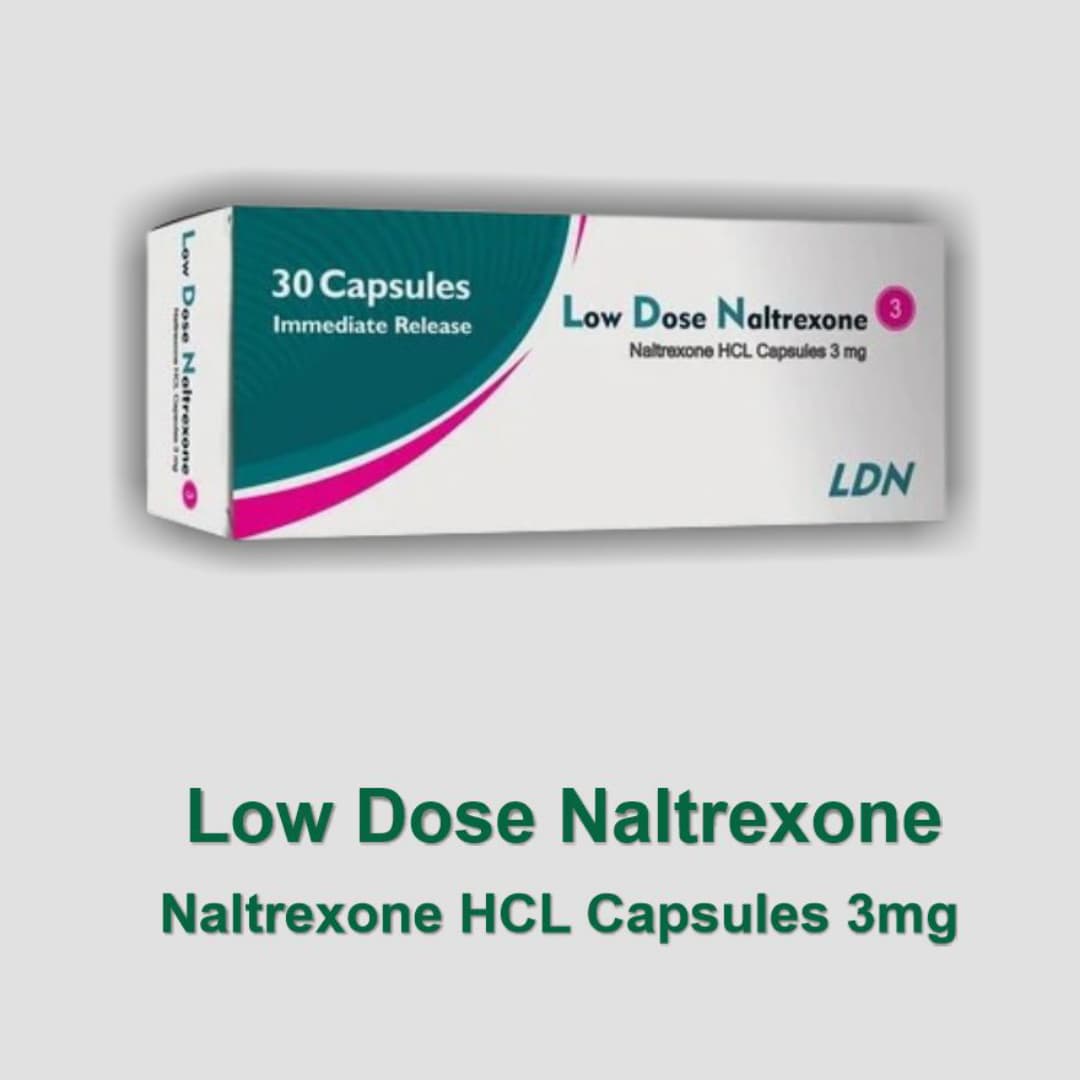
Generic name – Naltrexone 3mg
Brand name – Low Dose Naltrexone (LDN) 3mg
Packaging – 30 Tablets in 1 Box
Delivery Time – 6 To 15 Days.
Low Dose Naltrexone (LDN) 3mg is a precisely compounded oral tablet containing Naltrexone Hydrochloride at 3mg — a dose that sits at the midpoint of the commonly accepted LDN therapeutic range of 1.5mg to 4.5mg. Originally, regulators approved Naltrexone at the standard 50mg dose for treating opioid and alcohol dependence. However, when prescribers administer it at significantly lower doses, it produces an entirely different and therapeutically valuable set of pharmacological effects that benefit patients managing chronic pain, autoimmune diseases, and systemic inflammation.
The 3mg dose plays a particularly important role within the LDN treatment pathway. In most cases, prescribers introduce it as a mid-stage titration dose after patients have stabilised on the 1.5mg starting dose. Moreover, for a substantial number of patients, 3mg proves to be their optimal long-term maintenance dose — delivering full therapeutic benefit without the need to progress further to 4.5mg. Because every patient responds differently to LDN, the 3mg strength therefore gives prescribers a clinically meaningful and flexible dosing option between the starting and ceiling doses.
Because major pharmaceutical manufacturers do not currently produce Naltrexone at the 3mg dose commercially, licensed compounding pharmacies prepare LDN 3mg tablets or capsules to individual patient prescriptions. Consequently, the quality, excipients, and formulation may vary between compounding providers. Patients should always source LDN exclusively from regulated, accredited compounding pharmacies and only under the supervision of a qualified prescriber.
| Detail | Information |
|---|---|
| Medicine Name | Low Dose Naltrexone (LDN) 3mg |
| Active Ingredient | Naltrexone Hydrochloride 3mg |
| Drug Class | Opioid Antagonist (at low dose: Immune Modulator) |
| Primary Use | Autoimmune conditions, chronic pain, neuroinflammation |
| Form | Oral Tablet or Capsule (compounded) |
| Typical Dose Range | 1.5mg to 4.5mg (3mg is mid-range) |
| Onset of Therapeutic Effect | Four to twelve weeks of consistent use |
| Prescription Required | Yes |
LDN 3mg works through two complementary pharmacological pathways that together reduce systemic inflammation and recalibrate immune function. Importantly, these mechanisms differ fundamentally from the way standard-dose Naltrexone operates at 50mg.
Step 1 – Naltrexone briefly occupies opioid receptors. After ingestion, LDN 3mg binds to opioid receptors in the brain and body for a short window of approximately four to six hours. During this brief period, it prevents naturally circulating endorphins from attaching to these receptors.
Step 2 – The brain registers a perceived endorphin shortage. Because the receptors are temporarily occupied and unavailable, the brain interprets this state as a deficiency of endogenous opioids. In response, it actively increases the production of beta-endorphin and met-enkephalin — the body’s natural pain-modulating compounds.
Step 3 – Receptors become available again and endorphins surge. Since LDN clears from the bloodstream rapidly at such a low dose, the opioid receptors free up within hours. At this point, the elevated endorphin levels bind to the now-unblocked receptors. As a result, the patient experiences a sustained analgesic and immune-enhancing effect that extends well beyond the period of active drug presence.
Step 4 – Naltrexone targets Toll-like receptor 4 on microglial cells. Beyond its action on opioid receptors, research demonstrates that Naltrexone also binds to Toll-like receptor 4 (TLR4) on microglial cells — the primary immune cells of the central nervous system. This action directly reduces chronic microglial overactivation, which plays a major role in driving neuroinflammation.
Step 5 – Inflammatory cytokine levels decrease. By calming overactive microglia, LDN suppresses the production and release of key pro-inflammatory cytokines, including TNF-alpha, IL-6, and IL-12. Consequently, systemic and central inflammation both diminish over time.
Step 6 – Immune balance gradually restores. With consistent nightly dosing over several weeks, LDN shifts the immune system away from a chronically overactivated, pro-inflammatory state toward a healthier and more balanced regulatory response. This progressive recalibration explains why patients generally need four to twelve weeks of treatment before they notice meaningful clinical improvements.
Recommended Dose at This Strength: One tablet (3mg) orally, once nightly at bedtime
| Instruction | Detail |
|---|---|
| Dose | 3mg (1 tablet or capsule) |
| Time of Administration | Bedtime, ideally between 9 PM and midnight |
| With or Without Food | Either; food does not significantly affect absorption |
| Titration From | Typically prescribed after stabilising on 1.5mg |
| Titration To | Doctor may increase to 4.5mg if clinically indicated |
| Maximum Commonly Used Dose | 4.5mg per day |
| Prescription Required | Yes — always use under medical supervision |
Most prescribers introduce LDN gradually rather than starting directly at the target dose. Initially, patients begin at 1.5mg nightly for two to four weeks. Once the body adjusts well to that starting dose, the prescriber then increases it to 3mg for a further two to four weeks. This step-wise approach allows the body to adapt progressively and significantly reduces the likelihood of early side effects such as vivid dreams or mild sleep disturbance.
Not every patient needs to progress to 4.5mg. In fact, many patients find that 3mg delivers their full therapeutic benefit — including meaningful pain reduction, improved fatigue, and reduced inflammatory symptoms — without any need to increase further. For these individuals, 3mg therefore becomes their permanent maintenance dose. The decision to remain at 3mg or continue titrating upward should always rest with the prescribing physician, based on the patient’s clinical response and tolerability.
Patients who currently take any form of opioid medication must not use LDN, as Naltrexone at any dose directly blocks opioid receptors and will trigger immediate withdrawal. Furthermore, individuals receiving thyroid hormone replacement therapy should monitor their thyroid levels carefully during LDN treatment, since LDN can enhance thyroid function and may necessitate medication adjustments. Always provide the prescribing physician with a complete and current list of all medications before beginning treatment.
Most patients tolerate LDN 3mg well, especially those who have already adjusted to the 1.5mg starting dose through titration. Nevertheless, some users do experience mild effects during the adjustment period at this higher dose. These commonly include:
Since most of these effects are both dose-dependent and transient, they tend to resolve on their own within two to four weeks of starting the 3mg dose. Patients who experience persistent sleep disruption often find that shifting their dose to earlier in the evening — such as 7 PM rather than 10 PM — resolves the issue without requiring a dose reduction.
Although serious adverse effects at 3mg are uncommon, the following contraindications and risks demand careful attention before and during treatment:
Concurrent opioid use — Taking LDN alongside any opioid medication, including tramadol, codeine, morphine, or oxycodone, will precipitate immediate opioid withdrawal. This represents a serious and potentially dangerous drug interaction that patients and prescribers must always assess before initiating treatment.
Active opioid dependency — Patients with current opioid dependency must complete a medically supervised, opioid-free period of at least seven to ten days before starting LDN. A physician must confirm opioid clearance before prescribing.
Liver disease — Since Naltrexone undergoes metabolism in the liver, active hepatitis or hepatic failure represents a contraindication. Prescribers should conduct baseline liver function tests before initiating LDN treatment, particularly in patients with a history of liver disease or heavy alcohol use.
Pregnancy and breastfeeding — Researchers have not yet established the safety of LDN during pregnancy or lactation. Women who are pregnant, planning to conceive, or breastfeeding must consult their physician before use.
Post-surgical pain management — Patients who anticipate surgery should inform their anaesthetist and surgical team that they take LDN, since it may interfere with opioid-based post-operative pain relief. Prescribers typically advise stopping LDN at least three days before any planned surgical procedure.
Q1: What conditions does Low Dose Naltrexone 3mg treat? Prescribers use LDN 3mg for a broad range of conditions where immune dysregulation and chronic inflammation drive symptoms. These include fibromyalgia, multiple sclerosis (MS), Crohn’s disease, rheumatoid arthritis, lupus, Hashimoto’s thyroiditis, chronic fatigue syndrome (ME/CFS), and various neuropathic pain conditions. Furthermore, ongoing clinical research is actively investigating LDN’s potential role in managing long COVID symptoms and certain oncological applications.
Q2: How does LDN 3mg differ from LDN 1.5mg? Both doses work through the same mechanism, but the 3mg dose delivers a stronger and more sustained therapeutic effect for most patients. Prescribers typically introduce 3mg as a titration step after the body has adjusted to the 1.5mg starting dose. For many patients, 3mg also serves as the optimal long-term maintenance dose, because it provides full clinical benefit without requiring further dose escalation to 4.5mg.
Q3: How long does LDN 3mg take to work? LDN does not produce immediate results. Instead, it works gradually by rebalancing immune function and steadily increasing endorphin production over time. Most patients begin to notice measurable improvements after four to twelve weeks of consistent nightly use. Because the therapeutic process requires sustained adherence, patients should not discontinue LDN prematurely if results are not immediately apparent.
Q4: Can someone start LDN directly at the 3mg dose? Most prescribers advise against starting directly at 3mg. Instead, they recommend beginning at 1.5mg and titrating upward after two to four weeks of stable tolerance. This gradual approach reduces the likelihood of early side effects, particularly sleep disturbance and vivid dreaming, and allows the body to adjust to the medication’s mechanism of action more comfortably.
Q5: Does LDN 3mg interact with other medications? Yes. LDN interacts with several important drug classes. Most critically, it must never combine with opioid medications of any kind, as this will trigger immediate withdrawal. Additionally, patients taking immunosuppressants, thyroid hormone replacement therapy, or certain antidepressants should consult their prescriber before starting LDN, since dosage adjustments to existing medications may become necessary during treatment.
Q6: Can someone take LDN 3mg in the morning instead of at bedtime? Prescribers consistently recommend bedtime administration because the body’s natural endorphin production peaks between 2 AM and 4 AM. Taking LDN in the evening aligns the transient receptor blockade with this peak window. Consequently, when the Naltrexone clears from the system in the early morning hours, the endorphin rebound coincides with and amplifies the body’s natural peak output. Morning dosing does not produce the same pharmacological advantage.
Q7: Is LDN 3mg safe to take long-term? Current evidence and clinical experience strongly support the long-term safety of LDN at doses within the 1.5mg to 4.5mg range. Because Naltrexone does not cause organ toxicity at low doses, does not produce tolerance, and does not lead to dependency, many patients use it successfully for years without requiring dose increases or experiencing cumulative harm. Nevertheless, regular follow-up with a prescribing physician remains important for monitoring ongoing clinical response and safety.
Q8: Why do some patients stay at 3mg rather than increasing to 4.5mg? Clinical practice consistently shows that patients respond individually to LDN, and many achieve their full therapeutic benefit at 3mg without any need to progress to the 4.5mg ceiling dose. Since LDN follows a principle of using the lowest effective dose, prescribers do not routinely increase the dose if 3mg is already delivering satisfactory clinical improvements. Increasing the dose further in patients who are already responding well does not necessarily improve outcomes and may increase the likelihood of side effects.
Clinical experience consistently demonstrates that 3mg represents the sweet spot for a large proportion of LDN users. It delivers stronger immune modulation and pain relief than the 1.5mg starting dose, yet it avoids the additional side effect risk that some patients associate with the 4.5mg ceiling. As a result, many prescribers regard 3mg as the most clinically versatile dose within the LDN range.
Unlike conventional treatments for autoimmune and inflammatory conditions — such as corticosteroids or biologic agents — LDN 3mg does not broadly suppress immune function. Instead, it actively recalibrates immune activity by reducing overactivation and restoring regulatory balance. Consequently, patients benefit from meaningful inflammation control without the heightened infection susceptibility that immunosuppressive therapies typically introduce.
Rather than introducing external pain-blocking chemicals, LDN 3mg works by stimulating the body’s own endorphin system. Because it encourages the production of naturally occurring pain-modulating compounds, the analgesic effect feels integrated and sustained rather than artificial. For patients with conditions such as fibromyalgia or chronic neuropathic pain, this mechanism offers a genuinely distinct and valuable therapeutic pathway.
Naltrexone has been in widespread clinical use at 50mg for decades, and its safety profile is extensively documented. At the 3mg dose — representing just six percent of the standard amount — the side effect burden reduces dramatically. Furthermore, since LDN does not cause hepatotoxicity at low doses, does not suppress bone marrow function, and carries no addiction potential, it compares very favourably to most alternatives in the management of chronic long-term conditions.
Biologic medications for autoimmune conditions can cost thousands of pounds or dollars per month, placing them out of reach for many patients. LDN 3mg, by contrast, remains affordable when sourced from a regulated compounding pharmacy. This cost advantage makes it a genuinely accessible long-term treatment option, particularly for patients managing conditions such as rheumatoid arthritis, Crohn’s disease, or lupus on an ongoing basis.
The single nightly dose schedule integrates effortlessly into any daily routine. Unlike therapies that require multiple daily doses, injection administration, or complex dietary restrictions, LDN demands minimal adjustment from the patient. As a result, adherence rates tend to be higher, which directly supports better long-term clinical outcomes.
For patients with fibromyalgia, ME/CFS, multiple sclerosis, or treatment-resistant inflammatory conditions who have not responded adequately to conventional medications, LDN 3mg offers a clinically meaningful alternative. The growing body of peer-reviewed research supporting LDN — combined with the extensive real-world patient experience reported through organisations such as the LDN Research Trust — provides a compelling evidence base that prescribers and patients can draw on with increasing confidence.
Always consult a licensed healthcare professional before starting, stopping, or adjusting any medication. This content serves informational purposes only and does not constitute medical advice. LDN is a prescription-only medication in most jurisdictions and must be used exclusively under qualified medical supervision.
 Alcohol De Addiction
 Alcohol De Addiction
Explore Medicines
Select Using Category