$67.00 – $182.00Price range: $67.00 through $182.00
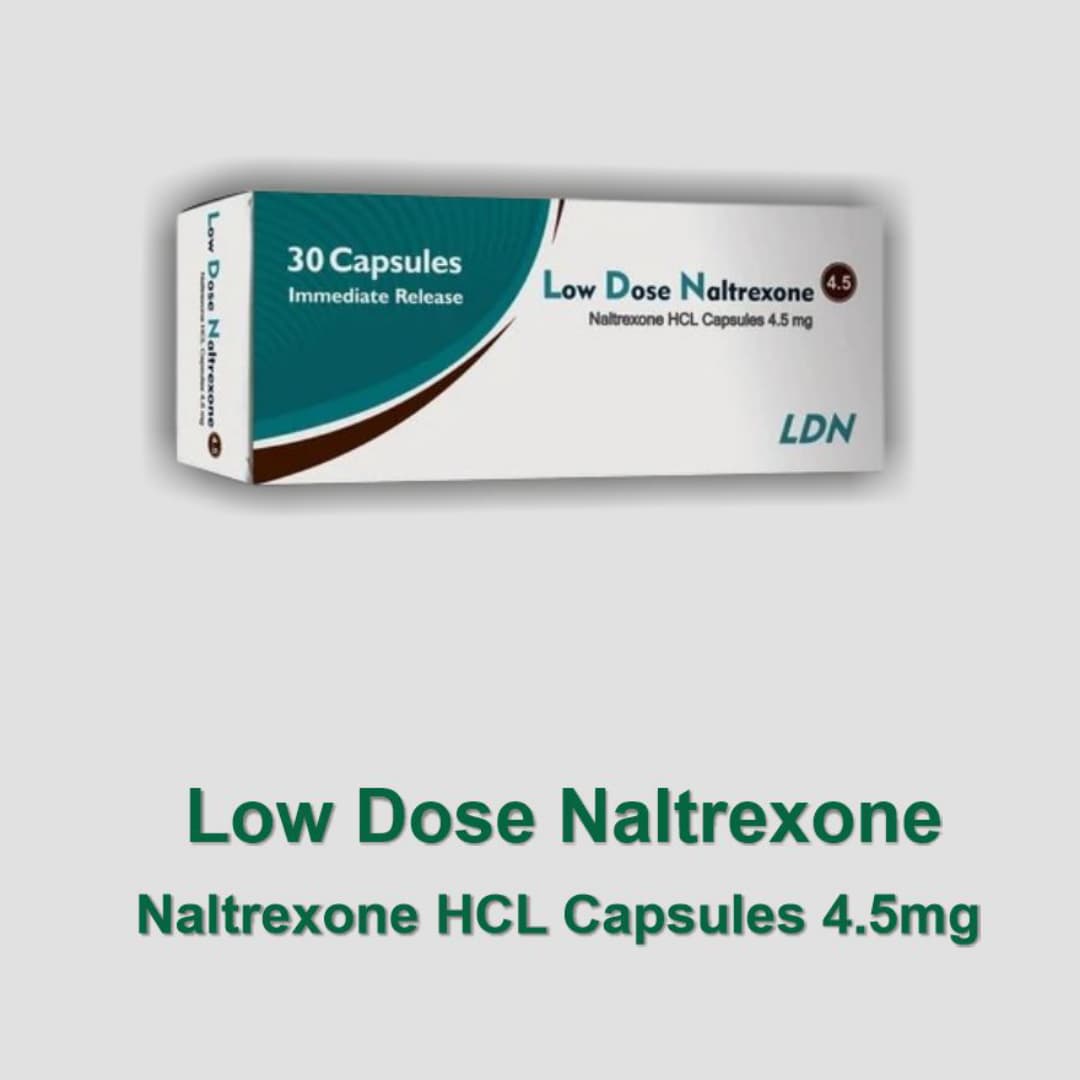
Generic name – Naltrexone 4.5mg
Brand name – Low Dose Naltrexone (LDN) 4.5mg
Packaging – 30 Tablets in 1 Box
Delivery Time – 6 To 15 Days.
Low Dose Naltrexone (LDN) 4.5mg is a compounded oral tablet containing Naltrexone Hydrochloride at 4.5mg. This is the top end of the standard LDN treatment range. Moreover, it is the dose most widely used in published clinical research trials.
Regulators first approved Naltrexone at 50mg for opioid and alcohol dependence. However, at much lower doses, it works in an entirely different way. Specifically, it benefits patients with chronic pain, autoimmune diseases, and long-term inflammation. Within the low-dose range, the 4.5mg dose produces the strongest overall effect.
Researchers chose the 4.5mg dose for most LDN clinical trials. It sits at the top of the range where short-term receptor blockade works best. Furthermore, it produces the strongest endorphin rebound and the most effective immune calming effect — without crossing into standard Naltrexone territory. For this reason, most published LDN studies refer specifically to the 4.5mg dose, making it the benchmark against which other strengths are compared.
Most doctors position 4.5mg as the target maintenance dose. Patients generally reach it after working through the 1.5mg and 3mg stages, which typically takes four to eight weeks. After that, patients who tolerate LDN well and need maximum benefit move to 4.5mg as their long-term dose.
Not every patient needs to reach this dose. In fact, many people achieve full benefit at 1.5mg or 3mg and therefore stay at the lower level. LDN treatment always follows the rule of using the lowest effective dose. Ultimately, a doctor decides the right dose based on each patient’s individual response and tolerance.
Mainstream drug companies do not currently make Naltrexone at 4.5mg commercially. Instead, licensed compounding pharmacies prepare it to individual prescriptions. Quality and ingredients may vary between providers. For this reason, always source LDN from a regulated compounding pharmacy and use it only under the care of a qualified prescriber.
| Detail | Information |
|---|---|
| Medicine Name | Low Dose Naltrexone (LDN) 4.5mg |
| Active Ingredient | Naltrexone Hydrochloride 4.5mg |
| Drug Class | Opioid Antagonist (at low dose: Immune Modulator) |
| Primary Use | Autoimmune conditions, chronic pain, neuroinflammation |
| Form | Oral Tablet or Capsule (compounded) |
| Position in LDN Range | Upper ceiling of the 1.5mg to 4.5mg therapeutic range |
| Onset of Therapeutic Effect | Four to twelve weeks of consistent nightly use |
| Prescription Required | Yes |
LDN 4.5mg works through two key pathways. Together, they reduce inflammation, help the immune system work better, and raise the body’s natural pain relief capacity. Crucially, these effects differ entirely from how standard 50mg Naltrexone works.
Step 1 – Naltrexone briefly blocks opioid receptors. After taking the tablet, LDN 4.5mg binds to opioid receptors for around four to six hours. During this window, it stops natural endorphins from attaching to these receptors.
Step 2 – The brain senses an endorphin shortage. With the receptors blocked, the brain detects a drop in endorphin activity. In direct response, it increases production of beta-endorphin and met-enkephalin — the body’s natural pain-relieving compounds.
Step 3 – Receptors free up and endorphins surge. LDN clears from the bloodstream quickly at this low dose, so the receptors soon become available again. At that point, the raised endorphin levels attach to the free receptors, creating a lasting pain-relieving and immune-boosting effect.
Step 4 – The 4.5mg dose creates the strongest rebound. Compared to lower LDN doses, 4.5mg produces a notably stronger receptor blockade. As a result, the endorphin surge that follows is also larger, which is why this dose delivers the greatest overall benefit within the LDN range.
Step 5 – Naltrexone targets immune cells in the nervous system. Research shows that Naltrexone also acts on Toll-like receptor 4 (TLR4), which sits on microglial cells — the immune cells of the brain and spinal cord. This action directly calms overactive microglia, which are a key driver of nerve inflammation.
Step 6 – Inflammatory signals decrease. By calming these overactive cells, LDN 4.5mg reduces the release of inflammatory chemicals such as TNF-alpha, IL-6, and IL-12. Consequently, both brain and body inflammation decrease over time.
Step 7 – The immune system gradually rebalances. With consistent nightly use over several weeks, LDN shifts the immune system toward a healthier, more regulated state. This gradual process is why patients typically need four to twelve weeks before noticing clear improvements.
Recommended Dose at This Strength: One tablet (4.5mg) orally, once nightly at bedtime
| Instruction | Detail |
|---|---|
| Dose | 4.5mg (1 tablet or capsule) |
| Time of Administration | Bedtime, ideally between 9 PM and midnight |
| With or Without Food | Either; food does not significantly affect absorption |
| Titration From | Typically reached after stabilising on 1.5mg then 3mg |
| Maximum Dose | 4.5mg per day — the established LDN ceiling |
| Prescription Required | Yes — always use under qualified medical supervision |
Reaching 4.5mg safely requires a gradual titration schedule. Most patients start at 1.5mg nightly for two to four weeks. Once comfortable, the doctor increases the amount to 3mg. After a further two to four weeks, patients who need maximum benefit then move to 4.5mg.
This step-by-step approach serves two clear purposes. First, it allows the body to adapt to the drug gradually and comfortably. Second, and equally important, it reduces early side effects such as sleep problems and vivid dreams. Patients who skip titration and start directly at 4.5mg are far more likely to experience these effects. In addition, they are more likely to stop treatment before it has a chance to work.
Many patients achieve full benefit at 1.5mg or 3mg and have no need to go higher. Since LDN follows the lowest effective dose principle, doctors do not automatically push patients toward the ceiling. Instead, the right dose depends entirely on clinical response and how well a patient tolerates each level.
Patients who take any opioid medication must not use LDN, because Naltrexone blocks opioid receptors and will cause immediate withdrawal. Additionally, those on thyroid hormone replacement should monitor thyroid levels during treatment, as LDN can improve thyroid function and may require adjustments to existing thyroid medication. Always give your doctor a full and current list of all medicines before starting LDN.
Most patients who titrate to 4.5mg gradually tolerate it well. Nevertheless, some people do experience mild effects during the adjustment period. These commonly include:
These effects are dose-related and short-lived. Moreover, they nearly always clear up on their own within two to four weeks. Patients with ongoing sleep issues often find that taking LDN earlier in the evening — for example, at 7 PM rather than 10 PM — solves the problem without any need to reduce the dose.
Taking LDN alongside any opioid — including tramadol, codeine, morphine, or oxycodone — will trigger immediate withdrawal. This is a serious risk. Both the prescriber and patient must therefore assess this carefully before starting treatment.
Patients who currently depend on opioids must first complete a supervised, opioid-free period of at least seven to ten days. A doctor must then confirm full opioid clearance before issuing a prescription.
Because Naltrexone is processed by the liver, active hepatitis, cirrhosis, or liver failure represents a clear contraindication. Doctors should therefore carry out baseline liver function tests before treatment begins, particularly in patients with relevant medical history.
The safety of LDN during pregnancy or breastfeeding has not yet been confirmed through adequate clinical research. Women who are pregnant, trying to conceive, or currently breastfeeding must consult their doctor before starting or continuing use.
Any patient due for surgery must inform their entire surgical and anaesthetic team that they take LDN. Since it blocks opioid receptors, it can interfere with post-operative pain relief. For this reason, most doctors advise stopping LDN three to five days before any planned surgical procedure.
Q1: What conditions does Low Dose Naltrexone 4.5mg treat? Doctors prescribe LDN 4.5mg for conditions driven by immune dysfunction and long-term inflammation. These include fibromyalgia, multiple sclerosis, Crohn’s disease, ulcerative colitis, rheumatoid arthritis, lupus, Hashimoto’s thyroiditis, and chronic fatigue syndrome. Furthermore, research continues to explore its use for long COVID, complex regional pain syndrome, and certain cancer-related applications.
Q2: Why is 4.5mg the most referenced LDN dose in research? The 4.5mg dose appears most often in clinical trials because it is the highest dose at which the short-term receptor blockade works at its best. Specifically, it produces the strongest endorphin rebound and the most effective immune calming — without crossing into standard Naltrexone territory. As a result, most published LDN studies use 4.5mg as their primary dose, making it the best-supported strength in the range.
Q3: How long does LDN 4.5mg take to produce noticeable effects? LDN does not work overnight. Rather, it works by gradually resetting immune activity and building up endorphin levels over time. Most patients notice clear improvements between four and twelve weeks of consistent nightly use. Some patients with more complex conditions may need up to six months. Sticking to the treatment throughout this period is therefore essential.
Q4: Is it safe to start LDN directly at 4.5mg? Most doctors strongly advise against starting at 4.5mg. Doing so raises the risk of early side effects such as vivid dreams, poor sleep, and nausea. By contrast, starting at 1.5mg and moving up through 3mg over four to eight weeks is far more comfortable. This approach also reduces the chance of stopping treatment too soon.
Q5: Does LDN 4.5mg interact with other medications? Yes, and a full medication review is essential before starting. Most critically, LDN must never be taken alongside any opioid drug, as this causes immediate withdrawal. In addition, patients on immune-suppressing drugs, thyroid hormone therapy, or certain antidepressants should discuss possible interactions with their doctor. Some existing medications may also need dose adjustments once LDN begins.
Q6: Why must someone take LDN 4.5mg at bedtime? The body naturally produces its highest endorphin levels between 2 AM and 4 AM. Taking LDN at bedtime therefore aligns the receptor blockade with this window. When Naltrexone then clears in the early morning, the endorphin rebound hits at exactly the right time. Morning dosing misses this window entirely, resulting in a notably weaker response.
Q7: Is LDN 4.5mg safe for long-term use? Yes, based on current evidence. LDN does not damage the liver at this dose, does not affect bone marrow, and does not cause tolerance or addiction. Many patients use it safely for years. Nevertheless, regular check-ins with the prescribing doctor remain important throughout long-term use.
Q8: What should someone do if 4.5mg causes persistent side effects? Rather than stopping abruptly, speak to your doctor first. In many cases, dropping back to 3mg temporarily and re-escalating more slowly solves the problem. Alternatively, moving the dose to earlier in the evening often fixes sleep-related effects without reducing the amount. A slow-release capsule version may also suit some patients better.
Most published LDN clinical trials use 4.5mg as their primary study dose. This gives it the strongest evidence base of any strength in the range. As a result, patients and doctors can draw on a substantial body of peer-reviewed research when choosing this dose. That level of clinical backing provides far greater confidence than less-studied alternatives.
LDN 4.5mg delivers the strongest immune recalibration effect within the LDN range. Specifically, it produces the most pronounced reduction in microglial overactivity and inflammatory chemical release. Crucially, however, it does this without switching off immune function broadly. Patients therefore gain meaningful control over long-term inflammation while still retaining the immune strength needed to fight infection. Standard immune-suppressing drugs rarely achieve this kind of balance.
The 4.5mg dose triggers the largest endorphin rebound within the LDN range. Patients who do not get enough relief at lower doses often respond well once they reach this level. For fibromyalgia, nerve pain, and central pain conditions in particular, this enhanced effect can make a real and lasting clinical difference.
Naltrexone carries decades of safety data at the 50mg dose. At just nine percent of that amount, the 4.5mg dose produces far fewer side effects. Specifically, it does not damage organs, does not suppress bone marrow, and carries no addiction risk. This profile compares very favourably to most long-term treatment options available for chronic autoimmune and inflammatory conditions.
Biologic drugs for autoimmune conditions can cost thousands of pounds or dollars each month and often require hospital visits for administration. LDN 4.5mg, by contrast, is highly affordable from a regulated compounding pharmacy. Moreover, it needs nothing more than a nightly tablet taken at home. This makes it a genuinely practical and accessible long-term option for patients managing conditions such as Crohn’s disease, rheumatoid arthritis, or multiple sclerosis.
One tablet at bedtime is all that LDN 4.5mg requires. There are no injections, infusion appointments, or complex food rules to follow. This simplicity helps patients stick to their treatment over the long term. Better day-to-day adherence, in turn, leads to better outcomes. For conditions that need years of continuous management, this practical advantage carries real and lasting value.
Many patients with fibromyalgia, ME/CFS, or treatment-resistant autoimmune disease do not get enough relief from standard drugs. Others find that side effects make conventional therapies hard to sustain. In both cases, LDN 4.5mg offers a genuinely different treatment pathway. Growing engagement from mainstream medical institutions — alongside the continued advocacy of organisations such as the LDN Research Trust — reflects increasing recognition that this approach deserves serious clinical consideration.
Always consult a licensed healthcare professional before starting, stopping, or adjusting any medication. This content serves informational purposes only and does not constitute medical advice. LDN is a prescription-only medicine in most countries and must be used exclusively under qualified medical supervision.
 Alcohol De Addiction
 Alcohol De Addiction
Explore Medicines
Select Using Category