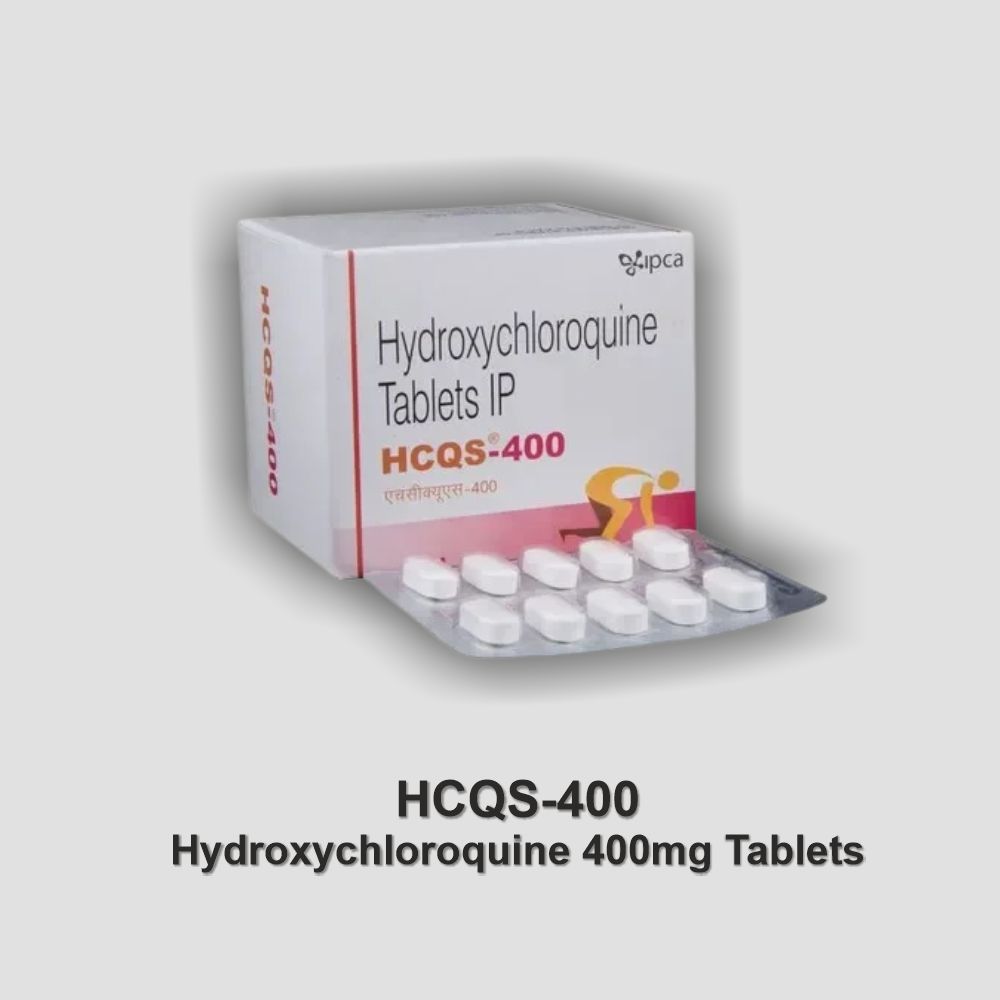
$125.00 – $245.00Price range: $125.00 through $245.00
Brand name – Ipca – Hydroxychloroquine
Generic name – Hydroxychloroquine 400 mg
Manufacturer – Ipca Laboratories
Packaging – 10 x 10 Tablets in 1 Pack
Delivery Time – 6 To 15 Days
Hydroxychloroquine 400mg is a well-proven prescription medicine that doctors use to treat and prevent malaria, manage rheumatoid arthritis, and control the symptoms of lupus. Each tablet contains 400mg of Hydroxychloroquine Sulphate as its active ingredient. Because it works through both anti-infection and immune-calming actions, it serves a broader purpose than most single-use medicines. As a result, it stands as one of the most useful and widely prescribed treatments in modern medicine today.
Doctors group Hydroxychloroquine under a class of treatments called Disease-Modifying Antirheumatic Drugs, or DMARDs. Physicians across joint medicine, infectious disease, and skin health have relied on it for more than six decades. Its safety record is therefore among the best-documented of any prescription medicine in regular clinical use.
The 400mg tablet delivers double the dose of the standard 200mg tablet in a single convenient serving. Many patients with autoimmune conditions such as rheumatoid arthritis and lupus require a daily total of 400mg, which they can now take as one tablet rather than two. This makes daily dosing simpler, reduces the chance of missed doses, and improves long-term treatment consistency. Doctors calculate the right dose based on body weight, with a general upper limit of 5mg per kilogram per day.
Hydroxychloroquine 400mg works through two separate but related actions. In malaria, it kills the parasite that causes the illness. In conditions like arthritis and lupus, it changes how the immune system triggers and spreads inflammation throughout the body.
Malaria parasites enter red blood cells and feed on the blood’s protein. During this process, they produce a harmful waste product called haem. To survive, the parasite converts haem into a safe solid substance. Hydroxychloroquine blocks this conversion directly. Toxic haem then builds up inside the parasite, breaks down its internal chemistry, and kills it. Because the medicine collects inside infected red blood cells, it delivers this targeted effect precisely where the parasite lives.
In rheumatoid arthritis and lupus, the immune system wrongly attacks the body’s own healthy tissue. This causes ongoing inflammation and, over time, real damage to joints and organs. Hydroxychloroquine steps in by changing how immune cells handle and pass on the signals that start these harmful attacks.
Immune cells use small internal spaces to process the triggers that start inflammatory responses. Hydroxychloroquine raises the acid level inside these spaces, which disrupts their ability to read those triggers clearly. As a result, the immune system generates fewer and weaker inflammatory responses than it would without the medicine.
On top of this, Hydroxychloroquine lowers the production of inflammatory proteins that the body uses to spread inflammation between cells. These proteins play a central part in driving the joint swelling and tissue damage seen in arthritis and lupus. Reducing their levels leads to real improvements in symptoms and slows disease progress over time.
Because Hydroxychloroquine works by slowly changing immune cell behavior rather than switching off inflammation instantly, patients with autoimmune conditions usually notice gradual improvement over weeks to months. Full benefit in arthritis and lupus often becomes clear only after three to six months of regular daily use. Continuing the medicine as prescribed is therefore essential, even when early results are not obvious.
Hydroxychloroquine 400mg offers a wide and well-documented set of clinical and practical benefits that explain why it remains a core treatment across multiple medical areas.
For malaria prevention in adults, the standard dose is 400mg taken once a week. Patients should start the weekly dose one to two weeks before entering a malaria-risk area, continue throughout the period of exposure, and take the tablet for four full weeks after leaving the area. The exact plan may vary based on the destination and personal health history. Confirming the schedule with a travel medicine doctor before departure is always recommended.
For treating uncomplicated malaria in adults, the standard plan starts with an 800mg initial dose. This is followed by 400mg at six hours, 24 hours, and 48 hours after the first dose. The full course delivers a total of 2000mg over three days. Completing the entire course even when symptoms ease early is very important, as stopping too soon can leave the parasite only partly cleared.
For rheumatoid arthritis, the typical adult dose ranges from 200mg to 400mg per day in one or two divided doses. The doctor works out the right dose based on body weight, with a maximum of 5mg per kilogram per day. Because the 400mg tablet matches the upper end of this range, many patients can take it as a single daily dose for convenience. Starting lower and adjusting based on response and comfort is standard clinical practice.
For systemic lupus erythematosus, the standard adult dose is 200mg to 400mg daily. Because lupus treatment runs long-term, doctors always aim for the lowest dose that keeps the condition under control. Using the 400mg tablet once daily suits patients whose doctor has determined this level is both effective and safe for them individually. This approach limits the build-up of side effects, especially the small but real risk of eye damage that grows with higher total doses over time.
Swallow the tablet whole with a full glass of water. Always take Hydroxychloroquine 400mg with food or milk, as this noticeably lowers the chance of nausea and stomach upset. Taking the dose at the same time each day helps keep a steady level of the medicine in the blood throughout the course of treatment.
Patients with kidney problems may need a lower dose or the 200mg strength, because the body removes this medicine mainly through the kidneys. Those with liver problems need close monitoring and possible dose changes. Older patients need a full health review before starting the 400mg dose. All patients taking this medicine long-term for autoimmune conditions need a baseline eye test before starting and a yearly eye check throughout treatment, as the risk of eye damage grows with higher doses and longer use.
Most patients handle Hydroxychloroquine 400mg well at the right dose. Some people do experience mild effects, especially during the first few weeks as the body adjusts. These are generally short-lived and clear up on their own without treatment.
Common side effects include:
In rare cases, this medicine can cause serious reactions that need prompt medical care. Patients should contact a doctor or go to the emergency room straight away if they notice any of the following:
Eye damage is the most serious long-term risk linked to this medicine. At the 400mg dose, the risk is slightly higher than at 200mg because the daily intake of active ingredient is greater. Early eye damage often causes no noticeable symptoms at all. Regular yearly checks with an eye specialist are therefore the only reliable way to catch a problem before permanent vision loss occurs. A full eye test before starting treatment and annual checks every year after that are essential for all long-term users of Hydroxychloroquine 400mg.
Hydroxychloroquine interacts with a range of other medicines, so patients must tell their doctor about everything they take before starting. Key interactions include antacids with aluminium or magnesium, which reduce how much medicine the body absorbs and must therefore be taken at least four hours apart. Other important interactions involve digoxin, insulin and oral diabetes medicines, medicines that affect heart rhythm, and certain antibiotics. Keeping the prescribing doctor fully up to date about all medicines in use helps prevent these issues from developing.
If any serious side effect occurs, stop taking Hydroxychloroquine 400mg right away and get medical help without delay. Patients managing autoimmune conditions should never stop treatment suddenly without talking to their doctor first, as doing so can trigger a significant disease flare that may be hard to bring back under control.
What is Hydroxychloroquine 400mg used for?
Hydroxychloroquine 400mg treats and prevents malaria and manages autoimmune conditions including rheumatoid arthritis and lupus. Because it works through both anti-infection and immune-calming actions, it helps patients across infectious disease, joint medicine, and skin health settings.
How is Hydroxychloroquine 400mg different from the 200mg tablet?
The 400mg tablet contains double the active ingredient of the 200mg version. For patients whose doctor prescribes a total daily dose of 400mg, this allows them to take one tablet instead of two. This makes the daily routine simpler, reduces the chance of missed doses, and supports better long-term treatment consistency.
How long does Hydroxychloroquine 400mg take to work?
For malaria, the medicine begins working within hours as it reaches peak blood levels. For autoimmune conditions such as arthritis and lupus, noticeable improvement develops gradually over several weeks to months. Full benefit typically becomes clear after three to six months of consistent daily use.
Do I need regular eye tests while taking this medicine?
Yes. All patients taking Hydroxychloroquine long-term for autoimmune conditions need a baseline eye test before starting and a yearly retinal check throughout treatment. At the 400mg dose, this monitoring is particularly important because the higher daily dose increases the long-term risk of eye damage compared to lower doses. Missing these checks is not advisable regardless of how well the patient feels.
Should I take Hydroxychloroquine 400mg with food?
Yes. Always take Hydroxychloroquine 400mg with food or milk. Doing so significantly lowers the risk of nausea and stomach upset, which are among the most common reasons patients miss doses or stop treatment too early. A regular mealtime routine also keeps blood levels steady throughout the course.
Can I take this medicine while pregnant?
Hydroxychloroquine is generally considered safe during pregnancy when a specialist prescribes it, particularly for women with lupus or rheumatoid arthritis. In many cases, stopping the medicine during pregnancy carries a greater risk than continuing it. All treatment choices during pregnancy need specialist input and regular medical review throughout.
How long will I need to take this medicine for lupus or arthritis?
For most patients with autoimmune conditions, Hydroxychloroquine 400mg forms part of an ongoing long-term treatment plan. Because it controls the root cause of disease activity rather than offering short-term relief, many patients take it for years under regular medical supervision. The prescribing doctor reviews the ongoing need at each appointment.
Can this medicine affect blood sugar levels?
Yes. Hydroxychloroquine can lower blood glucose levels, especially in patients who already take insulin or oral diabetes medicines. Patients with diabetes should check their blood sugar more often after starting treatment and report any changes to their doctor so that adjustments can be made if needed.
What should I do if I miss a dose?
Take the missed dose as soon as you remember on the same day. If the next scheduled dose is already due, skip the missed one and carry on with the normal schedule. Taking two doses at the same time to make up for a missed one is not safe and should always be avoided.
Can I stop taking Hydroxychloroquine 400mg on my own?
No. Patients managing autoimmune conditions should never stop this medicine without speaking to their doctor first. Stopping suddenly can trigger a major disease flare. A doctor will always advise on the safest way to reduce or end treatment when the time is clinically right.
 Hydroxychloroquine
 Hydroxychloroquine
 Anti Viral
Explore Medicines
Select Using Category