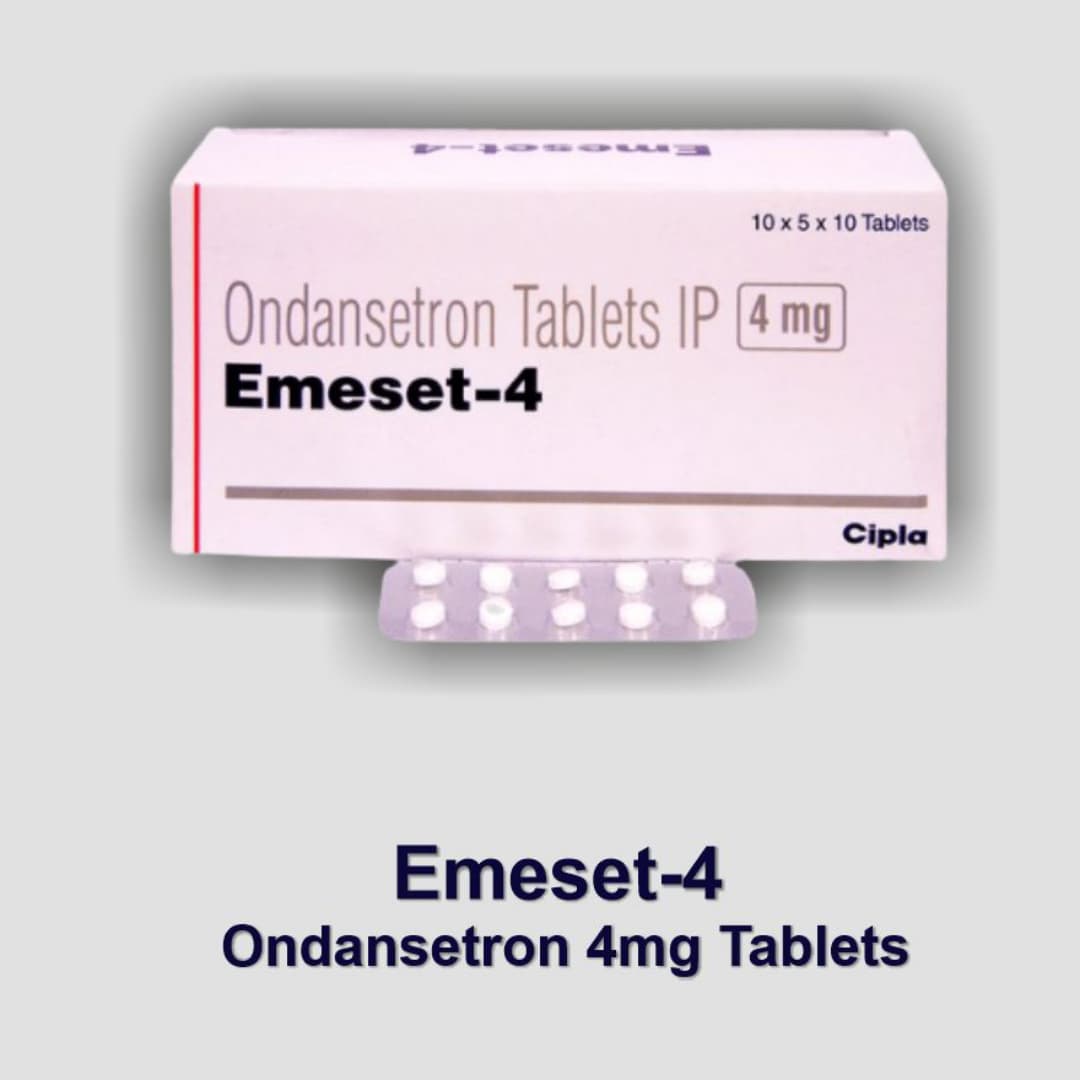
$42.00 – $120.00Price range: $42.00 through $120.00
Brand name – Emeset 4mg
Generic name – Ondansetron 4mg
Manufacturer – Cipla Ltd
Packaging – 10 tablets in 1 strip
Emeset 4mg is a prescription oral tablet that contains Ondansetron as its active ingredient. Cipla Ltd. manufactures this medicine. Cipla is one of India’s most trusted pharmaceutical companies with a strong global presence. Ondansetron belongs to a class of drugs called serotonin 5-HT3 receptor antagonists. These drugs work by blocking the chemical signals in the brain and gut that trigger nausea and vomiting.
Doctors prescribe Emeset 4mg for three main situations. First, it prevents and controls nausea and vomiting caused by chemotherapy. This is one of the most distressing side effects cancer patients face during treatment. Second, it manages nausea and vomiting that follows radiotherapy. Third, surgeons and anesthetists use it to prevent nausea and vomiting after surgical procedures.
Cipla Ltd. produces Emeset 4mg in GMP-certified manufacturing facilities. Every tablet meets strict international quality control standards. Because of Cipla’s long-standing reputation, both doctors and patients trust this medicine for consistent results. Emeset 4mg is also widely available across hospitals, clinics, and pharmacies, making it one of the most accessible antiemetic treatments today.
Serotonin is a natural chemical found throughout the body. The gut contains very high amounts of it. When chemotherapy drugs, radiation, or surgical trauma irritate the gut, cells in the gut wall release large amounts of serotonin. This serotonin then binds to receptors on the vagus nerve. The vagus nerve carries these signals directly to the vomiting center of the brain. The brain then triggers the feeling of nausea and the act of vomiting.
Ondansetron selectively blocks these serotonin receptors in both the gut and the brain. By attaching to these receptors first, Ondansetron stops serotonin from binding to them. As a result, the nerve signals that normally travel to the vomiting center never reach their destination. The brain therefore does not receive the signal to trigger nausea or vomiting.
Emeset 4mg works through two pathways at the same time. In the gut, it blocks receptors on the vagus nerve, stopping nausea signals from leaving the stomach. In the brain, it acts on the chemoreceptor trigger zone, which is the area that directly controls vomiting. This combined action delivers more complete nausea relief than medicines that target only one pathway.
After a patient takes Emeset 4mg orally, the body absorbs it rapidly. It reaches its peak level in the blood within one to two hours. Its effects then last for eight to twelve hours. Because of this duration, doctors often prescribe it two to three times daily during chemotherapy or radiation treatment cycles.
Adults receiving highly emetogenic chemotherapy should take 8mg one to two hours before treatment starts. They then take another 8mg dose eight hours later. After chemotherapy ends, doctors recommend continuing with 8mg twice daily for up to five days. For moderately emetogenic chemotherapy, one dose of 8mg before treatment and another dose eight hours later is usually enough.
Patients undergoing radiotherapy should take 8mg one to two hours before each radiation session. The doctor may adjust the frequency depending on the type and location of radiation treatment.
To prevent nausea after surgery, doctors often give a single dose of 4mg to 8mg. Oral administration typically involves taking 4mg one hour before surgery. Some patients receive it as an injection before anesthesia instead.
Children between four and eleven years of age generally take 4mg three times daily for chemotherapy-related nausea. The doctor calculates the precise dose based on the child’s age, weight, or body surface area. Parents must follow the exact prescription. Incorrect dosing can reduce effectiveness or increase side effects.
Swallow the tablet whole with a full glass of water. Emeset 4mg works with or without food. However, patients who feel stomach discomfort may prefer taking it with a light meal. Always follow the dosing schedule the doctor prescribes. Never take more than the recommended dose without medical advice.
Patients with severe liver disease should not exceed a total daily dose of 8mg. The liver metabolizes Ondansetron, so reduced liver function affects how the body processes the medicine. Elderly patients and those with certain heart conditions, especially a prolonged QT interval, may also need dose adjustments. Always tell the doctor about all other medicines before starting Emeset 4mg.
Most patients tolerate Emeset 4mg well. Common side effects are usually mild and short-lived. These include headache, which is the most frequently reported complaint, constipation, a warm or flushing sensation in the face, and mild dizziness. Some patients also experience dry mouth, tiredness, or light stomach discomfort during the course of treatment.
Some patients experience hiccups, diarrhea, a mild skin rash, or a temporary rise in liver enzyme levels. These effects appear less often and usually resolve without treatment. Patients should still report any persistent or worsening symptoms to their doctor for proper evaluation.
Although rare, certain side effects need urgent medical care. Patients must contact a doctor right away if they notice any of the following:
QT prolongation is an abnormality in the heart’s electrical activity. In rare cases, it can lead to a dangerous arrhythmia. This risk increases in patients who already have heart conditions, low potassium or magnesium levels, or who also take other medicines that affect heart rhythm. Doctors must carefully review a patient’s heart history before prescribing Emeset 4mg, especially at higher doses.
Emeset 4mg prevents and treats nausea and vomiting from chemotherapy, radiotherapy, and surgery. It blocks serotonin receptors in the gut and brain that trigger nausea. Doctors consider it one of the most effective antiemetic medicines available today.
Emeset 4mg starts working within one to two hours of taking the tablet. For the best results, patients should take it one to two hours before chemotherapy or radiotherapy begins. This timing allows the medicine to reach effective levels in the blood before treatment starts.
Yes, patients can take Emeset 4mg with or without food. Food does not significantly affect how well the body absorbs Ondansetron. However, patients who feel stomach discomfort when taking medicines on an empty stomach may prefer taking it with a light meal.
Yes, doctors approve Ondansetron for children above four years of age for chemotherapy-induced nausea. The dose depends on the child’s age, weight, or body surface area and is much lower than the adult dose. Parents must always follow the prescription the child’s doctor provides.
Emeset 4mg has approval for nausea caused by chemotherapy, radiotherapy, and surgery. Patients should not use this tablet to self-treat general stomach upset without first consulting a doctor. Using prescription medicines without proper guidance can lead to incorrect treatment and unnecessary side effects.
No, Emeset 4mg does not typically cause drowsiness or sedation. This sets it apart from many older antiemetic medicines. Patients can take it and remain mentally alert throughout their day. However, some patients may occasionally notice mild dizziness, and they should mention this to their doctor if it becomes a problem.
Doctors sometimes prescribe Ondansetron for severe nausea during pregnancy, particularly for hyperemesis gravidarum. However, some studies have raised concerns about its safety during the first trimester. Pregnant women must discuss the risks and benefits with their doctor before use. Doctors recommend it only when safer options have not worked and when the benefit clearly outweighs any potential risk.
Take the missed dose as soon as possible after remembering. However, if the next scheduled dose is very close, skip the missed dose and continue the regular schedule. Never take two doses at the same time to make up for a missed one. Doubling the dose raises the risk of side effects without improving its antiemetic effect.
Yes, Ondansetron interacts with several medicines. Patients must use it carefully alongside drugs that prolong the QT interval, such as certain antiarrhythmics, antidepressants, and antipsychotics. Medicines that raise serotonin levels, such as SSRIs or MAO inhibitors, can increase the risk of serotonin syndrome when combined with Ondansetron. Always inform the doctor about every medicine currently in use before starting Emeset 4mg.
Patients with a known allergy to Ondansetron should not take this medicine. Those with congenital long QT syndrome or those already taking QT-prolonging medicines should also avoid it unless a cardiologist specifically approves its use. Patients with severe liver disease must use it at a reduced dose and under close medical supervision.
Emeset 4mg (Ondansetron) – Fast-Acting Tablet for Nausea and Vomiting Relief
Emeset 4mg (Ondansetron) prevents nausea and vomiting from chemotherapy, surgery, and radiation. Learn dosage, benefits, and side effects of this trusted tablet. (160 characters)
Emeset 4mg is a prescription oral tablet that contains Ondansetron as its active ingredient. Cipla Ltd. manufactures this medicine. Cipla is one of India’s most trusted pharmaceutical companies with a strong global presence. Ondansetron belongs to a class of drugs called serotonin 5-HT3 receptor antagonists. These drugs work by blocking the chemical signals in the brain and gut that trigger nausea and vomiting.
Doctors prescribe Emeset 4mg for three main situations. First, it prevents and controls nausea and vomiting caused by chemotherapy. This is one of the most distressing side effects cancer patients face during treatment. Second, it manages nausea and vomiting that follows radiotherapy. Third, surgeons and anesthetists use it to prevent nausea and vomiting after surgical procedures.
Cipla Ltd. produces Emeset 4mg in GMP-certified manufacturing facilities. Every tablet meets strict international quality control standards. Because of Cipla’s long-standing reputation, both doctors and patients trust this medicine for consistent results. Emeset 4mg is also widely available across hospitals, clinics, and pharmacies, making it one of the most accessible antiemetic treatments today.
Serotonin is a natural chemical found throughout the body. The gut contains very high amounts of it. When chemotherapy drugs, radiation, or surgical trauma irritate the gut, cells in the gut wall release large amounts of serotonin. This serotonin then binds to receptors on the vagus nerve. The vagus nerve carries these signals directly to the vomiting center of the brain. The brain then triggers the feeling of nausea and the act of vomiting.
Ondansetron selectively blocks these serotonin receptors in both the gut and the brain. By attaching to these receptors first, Ondansetron stops serotonin from binding to them. As a result, the nerve signals that normally travel to the vomiting center never reach their destination. The brain therefore does not receive the signal to trigger nausea or vomiting.
Emeset 4mg works through two pathways at the same time. In the gut, it blocks receptors on the vagus nerve, stopping nausea signals from leaving the stomach. In the brain, it acts on the chemoreceptor trigger zone, which is the area that directly controls vomiting. This combined action delivers more complete nausea relief than medicines that target only one pathway.
After a patient takes Emeset 4mg orally, the body absorbs it rapidly. It reaches its peak level in the blood within one to two hours. Its effects then last for eight to twelve hours. Because of this duration, doctors often prescribe it two to three times daily during chemotherapy or radiation treatment cycles.
Adults receiving highly emetogenic chemotherapy should take 8mg one to two hours before treatment starts. They then take another 8mg dose eight hours later. After chemotherapy ends, doctors recommend continuing with 8mg twice daily for up to five days. For moderately emetogenic chemotherapy, one dose of 8mg before treatment and another dose eight hours later is usually enough.
Patients undergoing radiotherapy should take 8mg one to two hours before each radiation session. The doctor may adjust the frequency depending on the type and location of radiation treatment.
To prevent nausea after surgery, doctors often give a single dose of 4mg to 8mg. Oral administration typically involves taking 4mg one hour before surgery. Some patients receive it as an injection before anesthesia instead.
Children between four and eleven years of age generally take 4mg three times daily for chemotherapy-related nausea. The doctor calculates the precise dose based on the child’s age, weight, or body surface area. Parents must follow the exact prescription. Incorrect dosing can reduce effectiveness or increase side effects.
Swallow the tablet whole with a full glass of water. Emeset 4mg works with or without food. However, patients who feel stomach discomfort may prefer taking it with a light meal. Always follow the dosing schedule the doctor prescribes. Never take more than the recommended dose without medical advice.
Patients with severe liver disease should not exceed a total daily dose of 8mg. The liver metabolizes Ondansetron, so reduced liver function affects how the body processes the medicine. Elderly patients and those with certain heart conditions, especially a prolonged QT interval, may also need dose adjustments. Always tell the doctor about all other medicines before starting Emeset 4mg.
Most patients tolerate Emeset 4mg well. Common side effects are usually mild and short-lived. These include headache, which is the most frequently reported complaint, constipation, a warm or flushing sensation in the face, and mild dizziness. Some patients also experience dry mouth, tiredness, or light stomach discomfort during the course of treatment.
Some patients experience hiccups, diarrhea, a mild skin rash, or a temporary rise in liver enzyme levels. These effects appear less often and usually resolve without treatment. Patients should still report any persistent or worsening symptoms to their doctor for proper evaluation.
Although rare, certain side effects need urgent medical care. Patients must contact a doctor right away if they notice any of the following:
QT prolongation is an abnormality in the heart’s electrical activity. In rare cases, it can lead to a dangerous arrhythmia. This risk increases in patients who already have heart conditions, low potassium or magnesium levels, or who also take other medicines that affect heart rhythm. Doctors must carefully review a patient’s heart history before prescribing Emeset 4mg, especially at higher doses.
Emeset 4mg prevents and treats nausea and vomiting from chemotherapy, radiotherapy, and surgery. It blocks serotonin receptors in the gut and brain that trigger nausea. Doctors consider it one of the most effective antiemetic medicines available today.
Emeset 4mg starts working within one to two hours of taking the tablet. For the best results, patients should take it one to two hours before chemotherapy or radiotherapy begins. This timing allows the medicine to reach effective levels in the blood before treatment starts.
Yes, patients can take Emeset 4mg with or without food. Food does not significantly affect how well the body absorbs Ondansetron. However, patients who feel stomach discomfort when taking medicines on an empty stomach may prefer taking it with a light meal.
Yes, doctors approve Ondansetron for children above four years of age for chemotherapy-induced nausea. The dose depends on the child’s age, weight, or body surface area and is much lower than the adult dose. Parents must always follow the prescription the child’s doctor provides.
Emeset 4mg has approval for nausea caused by chemotherapy, radiotherapy, and surgery. Patients should not use this tablet to self-treat general stomach upset without first consulting a doctor. Using prescription medicines without proper guidance can lead to incorrect treatment and unnecessary side effects.
No, Emeset 4mg does not typically cause drowsiness or sedation. This sets it apart from many older antiemetic medicines. Patients can take it and remain mentally alert throughout their day. However, some patients may occasionally notice mild dizziness, and they should mention this to their doctor if it becomes a problem.
Doctors sometimes prescribe Ondansetron for severe nausea during pregnancy, particularly for hyperemesis gravidarum. However, some studies have raised concerns about its safety during the first trimester. Pregnant women must discuss the risks and benefits with their doctor before use. Doctors recommend it only when safer options have not worked and when the benefit clearly outweighs any potential risk.
Take the missed dose as soon as possible after remembering. However, if the next scheduled dose is very close, skip the missed dose and continue the regular schedule. Never take two doses at the same time to make up for a missed one. Doubling the dose raises the risk of side effects without improving its antiemetic effect.
Yes, Ondansetron interacts with several medicines. Patients must use it carefully alongside drugs that prolong the QT interval, such as certain antiarrhythmics, antidepressants, and antipsychotics. Medicines that raise serotonin levels, such as SSRIs or MAO inhibitors, can increase the risk of serotonin syndrome when combined with Ondansetron. Always inform the doctor about every medicine currently in use before starting Emeset 4mg.
Patients with a known allergy to Ondansetron should not take this medicine. Those with congenital long QT syndrome or those already taking QT-prolonging medicines should also avoid it unless a cardiologist specifically approves its use. Patients with severe liver disease must use it at a reduced dose and under close medical supervision.
{
  "@context": "https://schema.org",
  "@type": "FAQPage",
  "mainEntity": [
    {
      "@type": "Question",
      "name": "What is Emeset 4mg used for?",
      "acceptedAnswer": {
        "@type": "Answer",
        "text": "Emeset 4mg prevents and treats nausea and vomiting caused by chemotherapy, radiotherapy, and surgical procedures. It blocks serotonin receptors in the gut and brain that trigger nausea and vomiting."
      }
    },
    {
      "@type": "Question",
      "name": "How quickly does Emeset 4mg work?",
      "acceptedAnswer": {
        "@type": "Answer",
        "text": "Emeset 4mg begins working within one to two hours of taking the tablet. Patients should take it one to two hours before chemotherapy or radiotherapy for the best results."
      }
    },
    {
      "@type": "Question",
      "name": "Can Emeset 4mg be taken without food?",
      "acceptedAnswer": {
        "@type": "Answer",
        "text": "Yes, patients can take Emeset 4mg with or without food. Food does not significantly affect its absorption. Patients with stomach sensitivity may prefer taking it with a light meal."
      }
    },
    {
      "@type": "Question",
      "name": "Is Emeset 4mg safe for children?",
      "acceptedAnswer": {
        "@type": "Answer",
        "text": "Yes, Ondansetron is approved for children above four years of age for chemotherapy-induced nausea. The dose depends on age and weight. Parents must follow the doctor's prescription carefully."
      }
    },
    {
      "@type": "Question",
      "name": "Does Emeset 4mg cause drowsiness?",
      "acceptedAnswer": {
        "@type": "Answer",
        "text": "No, Emeset 4mg does not cause significant drowsiness or sedation. This is a key advantage over older antiemetic medicines. Some patients may notice mild dizziness, which they should report to their doctor."
      }
    },
    {
      "@type": "Question",
      "name": "Can Emeset 4mg be used during pregnancy?",
      "acceptedAnswer": {
        "@type": "Answer",
        "text": "Doctors sometimes use Ondansetron for severe pregnancy-related nausea. However, pregnant women must discuss risks and benefits with their doctor before use, especially during the first trimester."
      }
    },
    {
      "@type": "Question",
      "name": "What should I do if I miss a dose of Emeset 4mg?",
      "acceptedAnswer": {
        "@type": "Answer",
        "text": "Take the missed dose as soon as you remember. If your next dose is very close, skip the missed one and continue your regular schedule. Never take two doses at the same time."
      }
    },
    {
      "@type": "Question",
      "name": "Can Emeset 4mg interact with other medicines?",
      "acceptedAnswer": {
        "@type": "Answer",
        "text": "Yes, Ondansetron interacts with medicines that prolong the QT interval or raise serotonin levels, including certain antidepressants and antiarrhythmics. Always tell your doctor about all medicines you currently take."
      }
    },
    {
      "@type": "Question",
      "name": "Can I take Emeset 4mg for general nausea or stomach upset?",
      "acceptedAnswer": {
        "@type": "Answer",
        "text": "Emeset 4mg has approval for nausea from chemotherapy, radiotherapy, and surgery. Patients should not self-treat general stomach upset with this tablet without consulting a doctor first."
      }
    },
    {
      "@type": "Question",
      "name": "Who should not take Emeset 4mg?",
      "acceptedAnswer": {
        "@type": "Answer",
        "text": "Patients allergic to Ondansetron, those with congenital long QT syndrome, or those taking QT-prolonging medicines should not use Emeset 4mg. Patients with severe liver disease must use it at a reduced dose under medical supervision."
      }
    }
  ]
}Emeset 4mg targets one of medicine’s most difficult challenges, which is controlling nausea and vomiting during cancer treatment. Uncontrolled nausea is a leading reason why patients stop chemotherapy early. Emeset 4mg delivers fast and reliable antiemetic control. This allows patients to stay on their full treatment schedule without interruptions caused by severe nausea.
Older antiemetics like metoclopramide and promethazine often cause drowsiness, restlessness, and involuntary muscle movements. Emeset 4mg works differently. It selectively targets only the 5-HT3 receptors responsible for nausea. As a result, it provides focused nausea control without the unwanted side effects that older medicines commonly produce.
Emeset 4mg does not cause sedation. Patients remain mentally sharp and fully active during treatment. This matters greatly for cancer patients who want to maintain independence during chemotherapy cycles. It also benefits postoperative patients who need a clear head during early recovery.
Ongoing nausea from chemotherapy leads to poor eating, weight loss, and physical weakness. By controlling nausea effectively, Emeset 4mg helps patients maintain their appetite. Patients eat better, maintain their strength, and recover more effectively. Better nutrition also directly supports the body’s ability to handle further treatment.
Oncologists, surgeons, anesthetists, and radiologists all prescribe Emeset 4mg regularly. This broad use across medical specialties reflects its consistent clinical performance. Leading oncology treatment guidelines worldwide also include Ondansetron as a first-line antiemetic recommendation.
Cipla Ltd. operates in over 80 countries and holds a long-standing reputation for quality and innovation. Every Emeset 4mg tablet comes from a GMP-certified facility that meets the highest international manufacturing standards. Patients and doctors can therefore trust that every dose delivers precise and consistent amounts of Ondansetron.
Cancer treatment and postoperative recovery often require antiemetic support over several weeks. Because Cipla produces Emeset 4mg as a cost-effective generic medicine, patients can access high-quality nausea treatment without excessive financial strain. This affordability makes sustained treatment practical for a much wider group of patients.
Doctors have used Ondansetron in clinical medicine for several decades. Extensive research across diverse patient groups, including adults, children, elderly patients, and cancer patients undergoing intensive chemotherapy, has consistently confirmed its safety and effectiveness. Healthcare providers around the world therefore continue to trust it as a first-line antiemetic treatment for the conditions it targets.
Disclaimer: This content serves informational purposes only and does not replace professional medical advice. Always consult a licensed healthcare professional before starting, stopping, or adjusting any prescribed medication.
 General Medicines
Explore Medicines
Select Using Category