$80.00 – $200.00Price range: $80.00 through $200.00
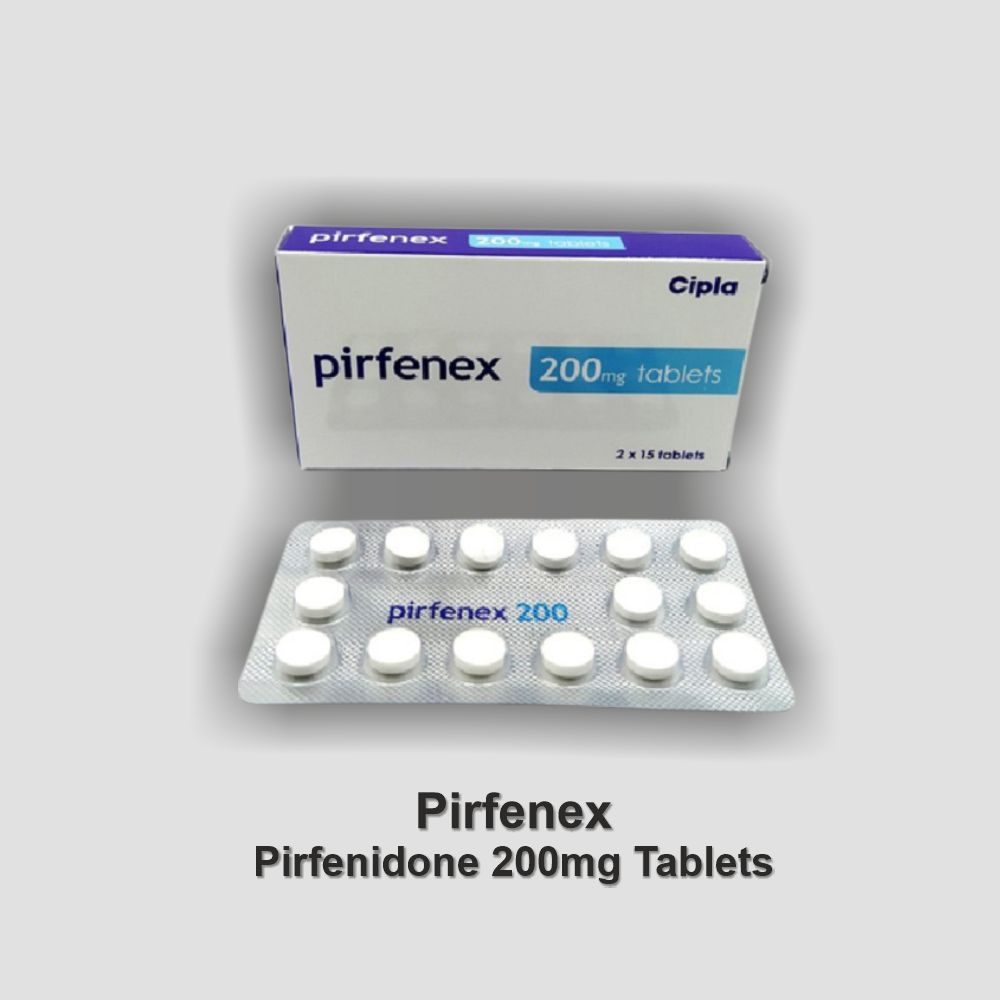
Brand name – Pirfenex 200
Generic name – Pirfenidone
Manufacturer – Cipla Ltd.
Packaging – 15 Tablets in 1 Strip
Delivery Time – 6 To 15 Days.
Pirfenex 200mg is a prescription oral tablet that contains Pirfenidone as its active ingredient. Cipla Ltd. manufactures this medicine. Cipla is one of India’s most respected and globally recognized pharmaceutical companies with a strong presence in over 80 countries. Pirfenidone belongs to a class of drugs called antifibrotic agents. These drugs work by slowing the progression of abnormal scar tissue formation in the lungs.
Doctors prescribe Pirfenex 200mg specifically to treat idiopathic pulmonary fibrosis, commonly referred to as IPF. IPF is a serious and progressive chronic lung disease. In this condition, the lung tissue gradually becomes scarred and stiff over time. This scarring makes it increasingly difficult for the lungs to function properly. As a result, patients experience worsening breathlessness, a persistent dry cough, and a steady decline in their ability to carry out daily activities.
The word idiopathic means the exact cause of the condition is unknown. IPF affects the alveoli, which are the tiny air sacs inside the lungs responsible for oxygen exchange. As scar tissue replaces healthy lung tissue, the alveoli lose their flexibility and ability to transfer oxygen into the blood. IPF currently has no cure. However, medicines like Pirfenex 200mg slow the rate at which the scarring progresses. This helps patients maintain their lung function for longer and improves their overall quality of life.
Cipla Ltd. produces Pirfenex 200mg in GMP-certified manufacturing facilities under strict international quality standards. Because Cipla has a long and established history of producing high-quality, affordable medicines, both doctors and patients trust every tablet for consistent and reliable therapeutic results. Pirfenex 200mg is one of the most widely prescribed antifibrotic treatments for IPF in India and across multiple international markets.
To understand how Pirfenex 200mg works, it helps to first understand what happens inside the lungs of an IPF patient. Normally, when the lung tissue suffers minor injury, the body repairs it by producing a controlled amount of collagen and fibrous tissue. This process heals the damage without causing lasting harm. However, in IPF patients, this repair process goes wrong. The body produces excessive amounts of fibrous tissue even without significant injury. Over time, this excessive scarring replaces normal lung tissue and permanently reduces lung capacity.
Pirfenidone works through multiple mechanisms to slow down this abnormal scarring process. First, it reduces the activity of transforming growth factor beta, commonly called TGF-beta. TGF-beta is one of the most powerful drivers of fibrosis in the lungs. By blocking TGF-beta activity, Pirfenidone directly reduces the signals that tell the body to produce excess collagen and scar tissue.
In addition to its antifibrotic effect, Pirfenidone also has anti-inflammatory properties. Inflammation plays an important role in triggering and accelerating the fibrosis process in IPF. By reducing inflammatory activity in the lung tissue, Pirfenidone further slows down the progression of scarring. This dual antifibrotic and anti-inflammatory action makes it a uniquely effective treatment for IPF.
Pirfenidone also acts as an antioxidant in the lung tissue. Oxidative stress contributes to ongoing lung cell damage in IPF patients. By neutralizing harmful free radicals, Pirfenidone reduces oxidative damage to lung cells. Consequently, this helps preserve healthier lung tissue for longer.
It is important to understand that Pirfenex 200mg does not reverse existing lung scarring. Once fibrous tissue replaces healthy lung tissue, that damage cannot be undone. However, by slowing the rate at which new scarring forms, Pirfenex 200mg helps patients preserve their remaining lung function. This preservation significantly improves their quality of life and, in many cases, extends their survival.
Doctors introduce Pirfenex 200mg gradually to reduce the risk of side effects. During the first seven days of treatment, patients take one tablet of 200mg three times daily with meals. This gives the body time to adjust to the medicine. During the second week, the doctor increases the dose to two tablets of 200mg three times daily. From the third week onward, patients take the full maintenance dose of three tablets of 200mg three times daily, which equals a total daily dose of 1800mg.
Always take Pirfenex 200mg with food. Taking it with a meal significantly reduces the risk of nausea and stomach upset, which are among the most common side effects. Swallow the tablet whole with a full glass of water. Space the three daily doses evenly throughout the day to maintain consistent levels of the medicine in the bloodstream. Taking doses at the same times each day also helps build a regular routine that improves adherence.
Pirfenidone makes the skin more sensitive to sunlight. Therefore, patients must take specific precautions while on this treatment. Always apply a broad-spectrum sunscreen with a high SPF before going outdoors. Wear protective clothing such as long sleeves, hats, and sunglasses when exposed to sunlight. Avoid prolonged sun exposure whenever possible. These precautions significantly reduce the risk of photosensitivity reactions, which can range from mild sunburn to more serious skin rashes.
If a patient misses a dose, they should take it as soon as they remember. However, if the next scheduled dose is very close, they should skip the missed dose and continue with the regular schedule. Never take two doses at the same time to make up for a missed one. Doubling the dose increases the risk of side effects without improving the therapeutic outcome.
Patients with liver disease need careful monitoring during treatment, as Pirfenidone can affect liver function. Doctors perform liver function tests before starting treatment and monitor them regularly throughout the course. If a patient develops significant liver enzyme elevations, the doctor may reduce the dose or discontinue the medicine. Patients with severe kidney impairment should also use Pirfenex 200mg with caution and under close medical supervision.
Most patients experience some side effects during the early weeks of treatment, particularly during the dose escalation phase. These effects often become milder or resolve entirely as the body adjusts to the medicine. Common side effects include nausea, which is the most frequently reported complaint, stomach upset or indigestion, loss of appetite, fatigue, dizziness, and headache. Photosensitivity, which is an increased sensitivity of the skin to sunlight, is also a very common and well-known side effect of Pirfenidone.
Gastrointestinal complaints are among the most common reasons why patients consider reducing or stopping treatment. Taking the tablet strictly with food significantly reduces these effects. If nausea persists despite taking the medicine with meals, patients should speak to their doctor. The doctor may temporarily reduce the dose and then gradually increase it again once the body adjusts.
Some patients experience weight loss, skin rash, insomnia, or joint pain during treatment. A mild to moderate skin rash, particularly in areas exposed to sunlight, can also develop. Patients should report any skin changes to their doctor promptly. Early management of rash symptoms reduces the risk of more severe skin reactions.
Although rare, certain side effects require urgent medical care. Patients must contact their doctor right away if they experience any of the following:
Liver enzyme elevations are a recognized risk with Pirfenidone treatment. However, serious liver damage is rare when doctors monitor patients appropriately. Patients must attend all scheduled blood tests during treatment. If liver function tests show significant abnormalities, the doctor will decide whether to adjust the dose or stop the medicine. Patients should never skip monitoring appointments during Pirfenex 200mg treatment.
Pirfenex 200mg treats idiopathic pulmonary fibrosis, which is a progressive chronic lung disease that causes irreversible scarring of the lung tissue. It slows the rate at which new scar tissue forms, helping patients preserve their lung function for longer. Doctors worldwide consider it one of the two approved antifibrotic treatments for IPF.
No, Pirfenex 200mg does not cure IPF. Currently, no medicine can reverse existing lung scarring or cure this disease. However, Pirfenex 200mg significantly slows the progression of scarring. As a result, patients maintain their lung function for longer, experience fewer hospitalizations, and enjoy a better quality of life compared to untreated patients.
Pirfenex 200mg works gradually over time. Patients do not typically notice an immediate improvement in their symptoms. Instead, the medicine works in the background by slowing the rate of lung function decline. Doctors usually assess the treatment response after three to six months of consistent use through lung function tests and other clinical evaluations.
Taking Pirfenex 200mg with food is essential because it significantly reduces the gastrointestinal side effects of Pirfenidone, particularly nausea and stomach upset. Food slows the absorption of the medicine and reduces the peak concentration of Pirfenidone in the blood. This lower peak level means the stomach and gut tolerate the medicine much better. Patients who take it on an empty stomach are far more likely to experience severe nausea.
Patients must take careful precautions with sunlight during Pirfenex 200mg treatment. Pirfenidone causes photosensitivity, which means the skin burns much more easily in sunlight. Patients should apply a high-SPF sunscreen daily, wear protective clothing when outdoors, and avoid prolonged sun exposure. These steps significantly reduce the risk of sunburn, rash, and more serious photosensitivity reactions.
Pirfenex 200mg is a long-term treatment. Because IPF is a progressive, lifelong disease, patients typically continue treatment indefinitely as long as it remains effective and well-tolerated. The doctor reviews the patient’s response and side effect profile regularly throughout the course of treatment and adjusts the plan accordingly.
Some medicines interact with Pirfenidone and either reduce its effectiveness or increase the risk of side effects. Medicines that strongly inhibit or induce the CYP1A2 enzyme in the liver, such as certain antibiotics like fluvoxamine and ciprofloxacin, can significantly alter how the body processes Pirfenidone. Patients must inform their doctor about every medicine, supplement, and herbal remedy they take before starting Pirfenex 200mg.
Elderly patients can generally use Pirfenex 200mg safely under medical supervision. Because IPF most commonly affects people above 60 years of age, elderly patients make up the majority of those who take this medicine. However, elderly patients often have reduced kidney and liver function, which may require closer monitoring during treatment. The doctor will assess each patient individually before prescribing.
Patients should avoid or significantly limit alcohol consumption while taking Pirfenex 200mg. Alcohol can worsen the gastrointestinal side effects of Pirfenidone, such as nausea and stomach discomfort. Furthermore, both alcohol and Pirfenidone place a burden on the liver. Combining them may increase the risk of liver-related complications. Patients must discuss alcohol use with their doctor before starting treatment.
Patients with a known allergy to Pirfenidone should not take this medicine. Those with severe liver disease or severe kidney impairment should also avoid it or use it only under extremely close medical supervision. Additionally, patients currently taking medicines that significantly interact with Pirfenidone, such as fluvoxamine, should discuss alternative treatment options with their doctor before starting Pirfenex 200mg.
IPF is a difficult disease to treat. Globally, only two medicines have regulatory approval for slowing its progression. Pirfenidone, the active ingredient in Pirfenex 200mg, is one of them. This approval comes after rigorous clinical trials that demonstrated its ability to significantly slow lung function decline. Doctors therefore prescribe it with full confidence in its proven clinical value.
IPF progresses silently and steadily. By the time many patients receive a diagnosis, they have already lost a significant portion of their lung function. Starting Pirfenex 200mg early in the disease course gives patients the best chance of preserving what healthy lung tissue remains. Early treatment leads to better long-term outcomes and a longer period of functional independence.
Most medicines work through a single pathway. Pirfenex 200mg, in contrast, acts through three distinct mechanisms simultaneously. It reduces abnormal collagen production, controls lung inflammation, and neutralizes oxidative damage. This triple action provides broader and more durable protection against the fibrosis process than a single-pathway medicine could deliver.
Clinical trials show that Pirfenidone not only slows lung function decline but also reduces the number of acute IPF exacerbations. These sudden worsening episodes are dangerous and often require emergency hospitalization. By reducing their frequency, Pirfenex 200mg helps patients stay out of hospital and maintain a more stable and comfortable daily life.
One of the most meaningful measures of IPF treatment success is the six-minute walk distance, which reflects how far a patient can walk in six minutes. Clinical studies demonstrate that patients taking Pirfenidone maintain or improve their walking distance compared to those who do not receive treatment. This improvement directly reflects better physical capacity and a higher level of daily functioning.
Branded antifibrotic treatments for IPF are among the most expensive medicines in the world. Pirfenex 200mg, manufactured by Cipla, offers the same proven active ingredient at a significantly more affordable price. This cost advantage makes long-term IPF management financially sustainable for a much broader group of patients and their families.
Cipla Ltd. is one of the most trusted pharmaceutical companies in the world. It operates in over 80 countries and consistently meets the highest international manufacturing standards. Every Pirfenex 200mg tablet comes from a GMP-certified facility. Patients and their doctors can therefore be fully confident that each dose delivers a precise, consistent, and therapeutically effective amount of Pirfenidone.
Pirfenidone has been studied extensively in large-scale international clinical trials. The CAPACITY and ASCEND trials, among others, demonstrated clear and statistically significant benefits in slowing IPF progression. Based on this evidence, regulatory authorities in the United States, Europe, Japan, India, and many other countries have approved Pirfenidone for clinical use. This broad regulatory approval reflects the strength and consistency of the clinical data behind this medicine.
Disclaimer: This content serves informational purposes only and does not replace professional medical advice. Always consult a licensed healthcare professional before starting, stopping, or adjusting any prescribed medication.
 Ivermectin
 Anti Viral
 Ivermectin
 Ivermectin
Explore Medicines
Select Using Category