$70.00 – $190.00Price range: $70.00 through $190.00
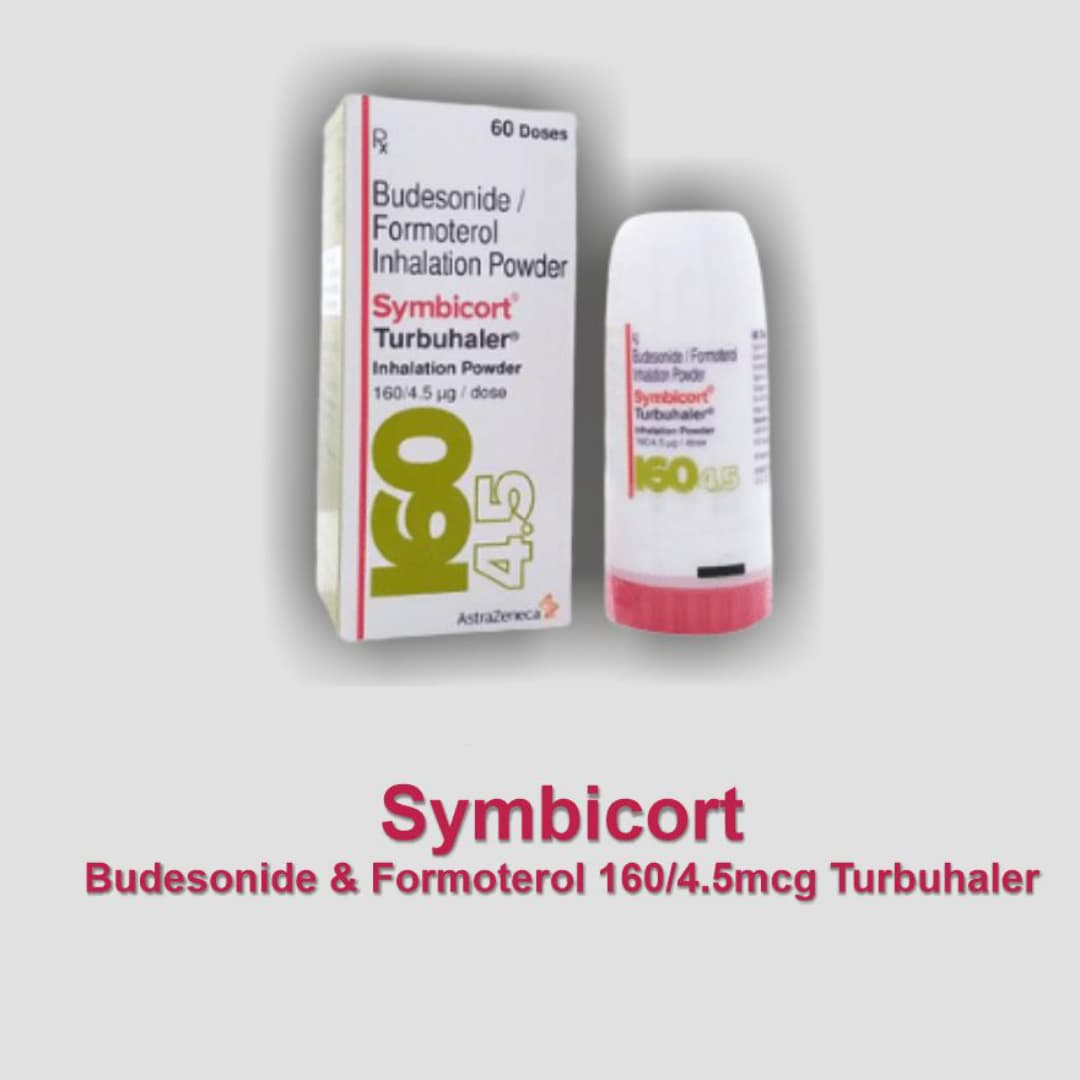
Brand name – Symbicort Turbuhaler
Generic name – Budesonide/Formoterol
Manufacturer – AstraZeneca
Packaging – 1 unit per box
Delivery Time – 6 To 15 Days.
Symbicort 160mcg/4.5mcg Turbuhaler is a prescription dry powder inhaler that contains two active ingredients working together. Each delivered dose contains Budesonide 160mcg and Formoterol Fumarate 4.5mcg. AstraZeneca, one of the world’s leading and most respected pharmaceutical companies, manufactures this medicine. Budesonide belongs to a class of drugs called inhaled corticosteroids. Formoterol belongs to a class of drugs called long-acting beta-2 agonists, commonly known as LABAs. Together, these two compounds provide both anti-inflammatory control and sustained bronchodilation in a single inhaler device.
Symbicort 160mcg/4.5mcg Turbuhaler combines two complementary mechanisms of action in a single device. Most maintenance inhalers for asthma and COPD either reduce inflammation or open airways. Symbicort does both simultaneously. Furthermore, the Turbuhaler device itself is a highly engineered dry powder inhaler that requires no propellant and delivers medicine directly into the airways with each breath. The device also features a dose indicator that shows patients exactly how many doses remain, helping them avoid running out of medicine unexpectedly.
Doctors prescribe Symbicort 160mcg/4.5mcg Turbuhaler for two primary respiratory conditions. First, it treats asthma in adults and adolescents above twelve years of age whose condition requires both an inhaled corticosteroid and a long-acting bronchodilator. Second, it treats chronic obstructive pulmonary disease, commonly known as COPD, in adults who need regular bronchodilator therapy alongside anti-inflammatory support. In both conditions, Symbicort works as a maintenance treatment taken regularly every day to keep symptoms controlled and prevent disease flares.
In asthma management, doctors also use Symbicort as part of a treatment strategy called SMART, which stands for Single Maintenance And Reliever Therapy. Under this approach, patients use the same Symbicort inhaler for both their regular daily maintenance doses and as a rescue inhaler when they experience sudden breathing difficulty. Because Formoterol has a fast enough onset of action to work as a reliever, the SMART strategy allows asthma patients to manage their condition with one inhaler instead of two. Doctors must specifically prescribe and explain this approach before patients adopt it.
AstraZeneca produces Symbicort in manufacturing facilities that meet the highest international pharmaceutical quality standards. Symbicort has been prescribed to millions of patients across the world for several decades. Because both Budesonide and Formoterol are individually well-established and extensively studied compounds, doctors understand their effects, interactions, and safety profiles thoroughly. This deep clinical knowledge, combined with AstraZeneca’s manufacturing excellence, makes Symbicort one of the most trusted combination inhalers in respiratory medicine globally.
To understand how Symbicort works, it helps to first understand what happens inside the airways in asthma and COPD. In both conditions, the airways become narrowed and obstructed, making breathing difficult. In asthma, this narrowing primarily results from inflammation of the airway lining and spasm of the smooth muscle surrounding the airways. In COPD, it results from a combination of chronic inflammation, permanent structural damage to the airways, and excessive mucus production. Both conditions cause breathlessness, wheezing, chest tightness, and coughing that significantly impair daily life.
Budesonide is an inhaled corticosteroid. After inhalation, it deposits directly onto the airway lining and binds to glucocorticoid receptors inside airway cells. This binding triggers a series of cellular changes that reduce the production of pro-inflammatory chemicals such as cytokines, prostaglandins, and leukotrienes. These chemicals are responsible for the swelling, redness, and mucus overproduction that characterize airway inflammation in asthma and COPD. By suppressing their production, Budesonide reduces airway swelling and mucus secretion. Over time, this reduces the frequency and severity of symptoms and prevents disease flares. Because Budesonide acts locally in the airways rather than systemically throughout the body, it produces fewer systemic side effects than oral corticosteroids at equivalent anti-inflammatory potency.
Formoterol is a long-acting beta-2 agonist. It works by binding to beta-2 adrenergic receptors on the smooth muscle cells that surround the airways. When Formoterol binds to these receptors, it activates a signaling pathway that causes these smooth muscle cells to relax. As the smooth muscle relaxes, the airways widen. This widening is called bronchodilation. Wider airways allow air to move in and out of the lungs more easily, reducing breathlessness and improving exercise tolerance. Formoterol’s bronchodilatory effect begins within one to three minutes of inhalation, which is faster than most other LABAs. Its effect then lasts for up to twelve hours. This combination of fast onset and long duration makes it both a reliable maintenance bronchodilator and a suitable reliever in the SMART strategy.
Budesonide and Formoterol do not simply add their effects together. They also enhance each other’s actions through complementary biological mechanisms. Budesonide increases the number of beta-2 receptors on airway smooth muscle cells, making them more responsive to Formoterol’s bronchodilatory effect. Formoterol, in turn, activates certain molecular pathways that enhance Budesonide’s anti-inflammatory gene expression within airway cells. This synergistic interaction means that the two ingredients together produce a greater therapeutic effect than either could deliver individually. This synergy is one of the key scientific reasons why combination inhalers like Symbicort are more effective than using each ingredient separately.
The Turbuhaler is a breath-actuated dry powder inhaler. Patients load a dose by twisting the base of the device and then inhale deeply and forcefully through the mouthpiece. The inhalation itself drives the dry powder deep into the airways without requiring the patient to coordinate pressing a canister and breathing simultaneously, which is a common challenge with pressurized metered-dose inhalers. Because the Turbuhaler requires no propellant, the inhaled medication is free of the chemicals that can sometimes cause throat and mouth irritation in propellant-containing inhalers.
For asthma maintenance in adults and adolescents above twelve years of age, the standard dose of Symbicort 160mcg/4.5mcg Turbuhaler is one to two inhalations taken twice daily. The doctor prescribes the starting dose based on the severity of the patient’s asthma and their current level of disease control. Once asthma is well controlled on a twice-daily regimen, the doctor may consider reducing the dose to the lowest effective level that maintains control. Regular review and dose adjustment are essential components of long-term asthma management.
Under the SMART strategy, adults and adolescents above twelve years of age take one to two inhalations of Symbicort 160mcg/4.5mcg twice daily as their regular maintenance dose. They then use the same inhaler as a reliever by taking one additional inhalation when breathing difficulty occurs. The maximum total daily dose under SMART, including both maintenance and reliever inhalations, is eight inhalations per day. Patients must follow the SMART strategy only if their doctor has specifically prescribed and explained this approach.
For COPD in adults, the standard dose is two inhalations of Symbicort 160mcg/4.5mcg twice daily. This gives a total daily dose of Budesonide 640mcg and Formoterol 18mcg. Doctors do not generally use the SMART strategy in COPD management. COPD patients use Symbicort strictly as a maintenance treatment and use a separate short-acting bronchodilator rescue inhaler for sudden breathlessness episodes.
Using the Turbuhaler correctly is essential for the medicine to reach the airways effectively. First, hold the inhaler upright and twist the brown base fully in one direction and then back again until it clicks. This loads one dose. Do not shake the device. Next, breathe out gently away from the mouthpiece. Never breathe out into the device. Then place the mouthpiece between the lips, form a good seal, and inhale deeply and forcefully through the mouth. The inhalation should be strong and fast to carry the powder deep into the airways. After inhaling, remove the inhaler from the mouth and hold the breath for approximately ten seconds. Then breathe out slowly. If a second dose is required, repeat the entire loading and inhalation process.
After every use of Symbicort, patients must rinse their mouth thoroughly with water and spit it out. This step is essential because Budesonide depositing in the mouth and throat can cause oral thrush, which is a fungal infection of the mouth and throat. Rinsing removes residual corticosteroid from the oral cavity before it can cause this complication. Patients must make rinsing an automatic part of every dose, even when they feel well.
Never exceed the prescribed daily dose. Never use Symbicort as the sole rescue inhaler in acute severe asthma or COPD attacks. Patients with a sudden severe attack must use a short-acting rescue bronchodilator such as salbutamol and seek emergency medical help. Always carry a short-acting rescue inhaler alongside Symbicort for emergency use. Patients with liver disease, thyroid conditions, or diabetes need closer monitoring during Symbicort treatment. Always inform the doctor about all current medicines before starting or adjusting Symbicort therapy.
Most patients tolerate Symbicort 160mcg/4.5mcg Turbuhaler well when they use it correctly and at the prescribed dose. Common side effects from the Budesonide component include oral thrush, which is a fungal infection of the mouth and throat that mouth rinsing after each dose prevents effectively, mild throat irritation or hoarseness, and occasional cough immediately after inhalation. Common side effects from the Formoterol component include mild tremor of the hands or fingers, palpitations or a slightly faster heartbeat, and mild headache. These effects are generally manageable and often diminish as the body adjusts to the medicine.
Some patients experience mild bruising of the skin, particularly with long-term use of higher Budesonide doses. Mild agitation, sleep disturbance, or muscle cramps may also occur in some patients from the Formoterol component. Additionally, some patients notice a slight decrease in bone density with very long-term inhaled corticosteroid use, though this risk is significantly lower with inhaled steroids than with oral corticosteroids. Doctors periodically assess bone health in patients on long-term inhaled corticosteroid therapy.
Although rare, certain serious side effects require urgent medical care. Patients must contact a doctor immediately if they experience any of the following:
Oral thrush is the most preventable side effect of Symbicort. It presents as white patches inside the mouth, throat soreness, or difficulty swallowing. Rinsing the mouth with water and spitting after every single dose virtually eliminates this risk. Patients who develop oral thrush despite rinsing must inform their doctor promptly. The doctor will prescribe an antifungal treatment and review the patient’s inhalation technique to ensure minimal oral deposition of Budesonide.
Symbicort 160mcg/4.5mcg Turbuhaler treats asthma in adults and adolescents above twelve years of age and COPD in adults. It combines Budesonide 160mcg, which reduces airway inflammation, and Formoterol 4.5mcg, which opens narrowed airways. Together, these two ingredients provide both long-term inflammation control and sustained bronchodilation in a single inhaler device.
A standard reliever inhaler such as salbutamol contains only a short-acting bronchodilator. It opens airways quickly but for only three to four hours. Symbicort is primarily a maintenance inhaler that reduces inflammation and provides twelve hours of bronchodilation per dose. In asthma patients using the SMART strategy, Symbicort can also serve as a reliever. However, it is not a substitute for a short-acting rescue inhaler in acute severe attacks. COPD patients must always carry a separate short-acting reliever alongside Symbicort.
The Formoterol component of Symbicort begins opening the airways within one to three minutes of inhalation, providing fast symptom relief. However, the full anti-inflammatory benefit of the Budesonide component develops gradually over days to weeks of regular use. Patients must therefore continue using Symbicort every day as prescribed, even when they feel well, to build and maintain this protective anti-inflammatory effect over time.
Rinsing the mouth after every dose removes Budesonide particles that deposit in the mouth and throat during inhalation. If these particles remain in the oral cavity, they create conditions that allow a fungal organism called Candida albicans to grow. This produces oral thrush, a fungal infection of the mouth and throat causing white patches, soreness, and difficulty swallowing. Rinsing with water and spitting effectively removes these particles and virtually eliminates the risk of thrush with consistent practice.
In asthma patients using the specifically prescribed SMART strategy, Symbicort 160mcg/4.5mcg can be used as both a maintenance and a rescue inhaler. Formoterol’s fast onset of action makes this possible. However, this approach must be specifically prescribed by a doctor. COPD patients and asthma patients not prescribed the SMART strategy must not use Symbicort as a rescue inhaler. They must use a separate short-acting bronchodilator for sudden attacks and seek emergency care for severe episodes.
Yes, Symbicort is designed and clinically validated for long-term daily use in both asthma and COPD. Regular use builds the sustained anti-inflammatory protection that prevents disease flares and reduces hospitalizations. Long-term use requires periodic monitoring of bone density, growth in adolescent patients, and adrenal function in patients who have also received oral corticosteroids. Doctors review these parameters regularly throughout long-term treatment to ensure ongoing safety.
No. Patients must not stop using Symbicort suddenly, even when they feel completely well. The anti-inflammatory protection that Budesonide provides builds up gradually with regular use. Stopping suddenly removes this protection and greatly increases the risk of a sudden asthma attack or COPD exacerbation. Patients who feel their condition has improved should discuss any dose changes with their doctor. The doctor will assess whether a gradual step-down in dose is appropriate while continuing to monitor the patient closely.
Doctors may prescribe Symbicort during pregnancy when the benefit of controlling poorly managed asthma or COPD clearly outweighs the risk to the unborn baby. Poorly controlled asthma during pregnancy poses a significant risk to both mother and baby. However, pregnant women must always discuss all treatment options with their doctor before starting or continuing Symbicort. The doctor will weigh all factors carefully and monitor both the mother and baby closely throughout the pregnancy.
If a patient misses a scheduled dose of Symbicort, they should take it as soon as they remember. However, if it is nearly time for the next scheduled dose, they should skip the missed one and continue with the regular dosing schedule. Never take two doses together to compensate for a missed dose. Doubling the dose increases the risk of side effects, particularly from the Formoterol component, without providing additional therapeutic benefit over the normal maintenance schedule.
Patients with a known allergy to Budesonide, Formoterol, or any ingredient in the Turbuhaler must not use this medicine. It must not be used as the sole treatment in acute severe asthma attacks or status asthmaticus, where immediate-acting rescue medicines and emergency care are required. Patients with certain rare heart rhythm conditions, severe hypertension, or thyrotoxicosis should use it only under close medical supervision. Patients must inform their doctor about all current medicines, including beta-blockers, which can block the bronchodilatory effect of Formoterol.
Symbicort 160mcg/4.5mcg Turbuhaler delivers two clinically proven and individually well-established medicines in a single, convenient inhaler. Managing asthma or COPD with a single combination device simplifies treatment significantly. Patients take fewer inhalers, follow a simpler routine, and reduce the risk of missing one component of their treatment. This simplicity directly improves daily treatment adherence, which is one of the strongest predictors of good long-term respiratory outcomes.
The combination of Budesonide and Formoterol produces a synergistic effect that is greater than the sum of each ingredient used separately. Budesonide increases airway sensitivity to Formoterol’s bronchodilatory effect. Formoterol enhances Budesonide’s anti-inflammatory gene activation. This biological synergy translates into better airway control, fewer symptoms, and a lower rate of disease flares than using either medicine alone. This is one of the most scientifically compelling reasons why combination inhalers represent the current standard of care in moderate to severe asthma and COPD.
Most inhaled corticosteroids take time to reduce inflammation and do not provide immediate symptom relief. Symbicort solves this limitation through the Formoterol component. Formoterol begins opening airways within one to three minutes of inhalation, providing immediate relief from breathlessness. At the same time, Budesonide works in the background to reduce the underlying airway inflammation that causes symptoms in the first place. This combination of fast relief and sustained protection gives patients both immediate comfort and long-term disease control.
Clinical trials consistently demonstrate that regular use of Symbicort significantly reduces the frequency and severity of asthma attacks and COPD exacerbations compared to using a bronchodilator alone. Exacerbations are dangerous events that cause permanent lung function decline, require emergency hospitalization, and significantly reduce quality of life. By reducing their frequency, Symbicort protects patients from the most harmful consequences of their respiratory disease. This protection is one of the most important reasons why doctors prescribe combination inhalers like Symbicort as the cornerstone of moderate to severe disease management.
The ability to use Symbicort under the SMART strategy is a uniquely valuable clinical advantage for asthma patients. SMART gives patients a single inhaler that handles both regular maintenance and unexpected breathlessness events. This eliminates the confusion of managing two different inhalers with different techniques, different dosing frequencies, and different emergency roles. Clinical evidence shows that the SMART strategy reduces severe asthma attacks and hospitalizations more effectively than fixed-dose maintenance therapy combined with a separate reliever.
The Turbuhaler’s breath-actuated design ensures that every inhalation delivers a consistent dose of medicine deep into the airways without requiring patients to coordinate pressing a canister and breathing simultaneously. This technical advantage is particularly important for older patients, patients with arthritis, and patients who find pressurized inhalers difficult to use correctly. The built-in dose indicator removes the guesswork about when to replace the device. Patients always know exactly how many doses remain and can plan their refill accordingly.
AstraZeneca is one of the world’s most recognized pharmaceutical companies and has dedicated decades of research specifically to respiratory medicine. The company has invested enormously in understanding asthma and COPD biology and in developing medicines that address these conditions at their most fundamental levels. Every Symbicort Turbuhaler comes from manufacturing facilities that meet the highest international pharmaceutical quality standards. Patients and doctors can therefore trust completely that each device delivers a precise, consistent, and clinically effective dose of both active ingredients with every use.
Symbicort has been used by millions of patients worldwide for several decades. Extensive clinical trial data, including large-scale real-world studies, consistently confirms its safety and effectiveness across diverse patient populations, age groups, and disease severities. This vast body of evidence gives respiratory specialists around the world the confidence to prescribe Symbicort as a first-line combination inhaler for patients who need both inhaled corticosteroid and long-acting bronchodilator therapy. No other combination inhaler has a longer or more thoroughly documented clinical history than Symbicort.
Disclaimer: This content serves informational purposes only and does not replace professional medical advice. Always consult a licensed healthcare professional before starting, stopping, or adjusting any prescribed medication. Always follow the inhalation technique and dosing schedule your doctor or respiratory nurse has demonstrated and prescribed.
 Asthma
 Asthma
 Asthma
 Asthma
Explore Medicines
Select Using Category